Dennis A Minott | How Jamaicans suffer when leaders scorn accountability

/ Our Today
administratorIn the uneasy months following Hurricane Melissa, one word has moved from polite discussion to public insistence—accountability. It is spoken in district council meetings, in market squares, on evening radio, and in quiet family conversations. It is no longer abstract. It is personal.
And when leaders scorn accountability—by evading scrutiny, dismissing oversight, delaying disclosures, or treating legitimate questions as irritations—Jamaicans suffer in ways that are tangible, measurable, and painfully familiar.
Let us examine that suffering plainly.
The Cost at the Pump, the Shop, and the Tax Office
When accountability weakens, public projects grow more expensive. Roads are repaired twice instead of once. School roofs leak again within a year. Clinics run short of basic supplies while budgets expand mysteriously.
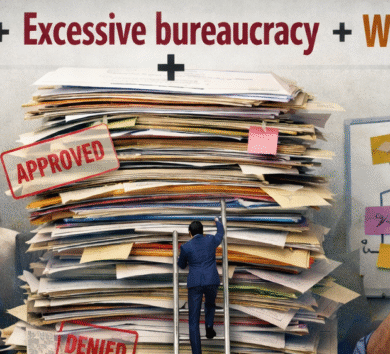
Without transparent procurement and independent auditing, contracts inflate quietly. Variations multiply. Completion dates drift. Every dollar lost to inefficiency is a dollar not spent on textbooks, farm roads, water systems, or hurricane-proof housing.
Ordinary Jamaicans feel this not through policy papers but through higher indirect taxes, stagnant wages, and public services that fail to improve despite repeated allocations.
Accountability is not a luxury; it is protection for the taxpayer.
Jobs That Never Arrive
Investors, both local and foreign, watch governance closely. When they perceive that rules are applied inconsistently or that scrutiny is selective, they hesitate.
Hesitation means fewer factories, fewer tech hubs, fewer agro-processing ventures. It means graduates returning home with degrees and finding only contract work. It means skilled tradesmen migrating because opportunity appears uncertain.
Diaspora Jamaicans—many deeply patriotic—calculate risk. If procurement lacks clarity or enforcement appears discretionary, they redirect their capital elsewhere. The absence of accountability becomes the absence of meaningful employment characterised by high productivity.
Reconstruction Without Trust
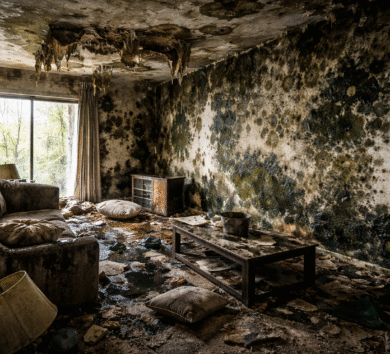
Post-Melissa rebuilding required speed. But speed without transparency breeds suspicion. Citizens expect clear, accessible reporting: who received contracts, how much was spent, what standards were met, and when milestones were achieved.
When such information is delayed or incomplete, rumours flourish. Even if no wrongdoing has occurred, opacity damages credibility.
Credibility matters. Insurance firms price risk based on governance signals. Development partners tighten procedures when trust weakens. Borrowing costs inch upward.
In a climate-exposed island, reputation in reconstruction is financial armour. Scorn accountability, and that armour cracks.
Erosion of Standards
When leaders treat oversight as hostility rather than stewardship, a subtle cultural shift occurs. Citizens internalise a troubling message: scrutiny is optional; power insulates.
If statutory declarations are late without consequence, if audit findings trigger indignation rather than correction, the example cascades downward.
The building contractor cuts corners. The procurement officer rationalises a favour. The motorist ignores compliance. The taxpayer hesitates to file accurately.
A nation’s standards are not sustained by rhetoric but by example. When leadership weakens the example, standards erode across sectors.
The Psychological Drain
Perhaps the deepest harm is psychological.
Young Jamaicans watch carefully. They observe whether merit alone advances careers or whether proximity to power matters more. They note whether questions are answered calmly or dismissed angrily.
When integrity appears secondary to influence, aspiration thins. Brain drain accelerates not merely because of salary gaps, but because fairness seems uncertain.
Talent migrates towards predictability.
A society that loses confidence in fairness loses more than people; it loses its future innovators, teachers, engineers, and entrepreneurs.
Education’s Fragile Foundation
In education, accountability failures have generational cost. If school infrastructure contracts are poorly supervised, children learn in unsafe environments. If attendance data are massaged, interventions miss their targets. If curriculum reforms lack rigorous evaluation, cohorts underperform without corrective response.
There is no replay button for a neglected academic year. A weakly supervised programme in 2026 becomes a reduced earning potential in 2036.
Accountability in education is therefore not administrative fussiness. It is intergenerational justice.
Institutional Fatigue
Modern democracies rely on integrity commissions, auditors general, and parliamentary committees to preserve fairness. When leaders undermine, ignore, or selectively engage these institutions, morale declines within them.
Citizens then begin to suspect that enforcement is uneven.
Selective enforcement is corrosive. It signals that accountability is relational rather than rule-based. Once that perception spreads, compliance falls. Informal practices grow. The state’s capacity weakens.
Ironically, leaders who resist oversight often weaken the very institutions that sustain their authority.
The Culture of Mediocrity
When accountability is scorned long enough, mediocrity normalises. Benchmarks blur. Performance expectations lower. Explanations replace results.
Context becomes a shield rather than explanation.
Small societies are especially vulnerable. Personal familiarity softens scrutiny. Relationships blur boundaries. Yet precisely because Jamaica is intimate, standards must be clearer, not looser.
Excellence requires discipline. Discipline requires accountability.
Reputation Beyond Our Shores
Jamaica’s global reputation is one of vibrancy and resilience. But international observers monitor governance signals closely. Questions surrounding unexplained wealth, inconsistent enforcement, or delayed disclosures ripple outward.
Tourism confidence, trade negotiations, development partnerships—all respond to credibility.
Reputation once tarnished is difficult to restore. Accountability is reputational insurance.
Accountability Strengthens Leadership
It is important to state clearly: accountability does not weaken leaders. It strengthens them.
A leader who voluntarily discloses financial information, invites independent audit, publishes procurement dashboards, and answers questions without defensiveness accumulates credibility.
Transparency builds political capital.
Conversely, leaders who personalise scrutiny, frame oversight as partisan attack, or react with indignation erode their own legitimacy.
In a small democracy, legitimacy is currency. It must be protected carefully.
What Genuine Accountability Looks Like
If Jamaica is to avoid long-term erosion, accountability must be operational.
This means:
• Timely, independently verified statutory declarations.
• Digitally accessible procurement above defined thresholds.
• Public reconstruction milestones certified by engineers.
• Clear ministerial responsibility for project outcomes.
• Functional whistleblower protections.
• Measured, evidence-based responses to audit findings.
These are not radical demands. They are foundational.
Most importantly, the tone of leadership must shift from defensiveness to stewardship. Questions are not insults; they are instruments of trust.
The Quiet Suffering
How, then, do Jamaicans suffer when leaders scorn accountability?
They suffer through higher costs and fewer jobs.
They suffer through stalled reconstruction and rising suspicion.
They suffer through eroded standards and declining trust.
They suffer when talented youth depart.
They suffer when education falters.
They suffer when reputation dims.
None of this happens overnight. Democratic decay is rarely dramatic. It is cumulative.
But cumulative harm can be reversed—if accountability is embraced as governing ethic rather than seasonal slogan.
Jamaica possesses capable technocrats, a respected central bank, resilient communities, and a diaspora willing to assist. These strengths, however, depend upon trust.
Trust depends upon transparency.
Transparency depends upon courage.
And courage, in leadership, is the willingness to be examined.
Accountability is not antagonism. It is oxygen. When leaders breathe it fully, institutions strengthen and citizens flourish.
When they scorn it, the people pay—quietly, steadily, and sometimes irreversibly.



Comments