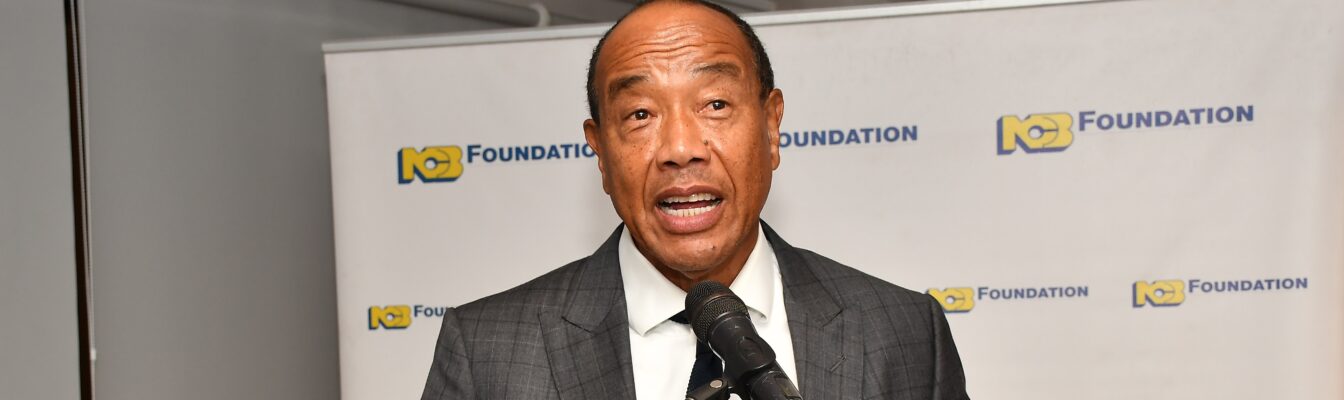
Does the Trinidad Guardian have it out for Michael Lee-Chin and NCB?

Al Edwards / Our Today
administrator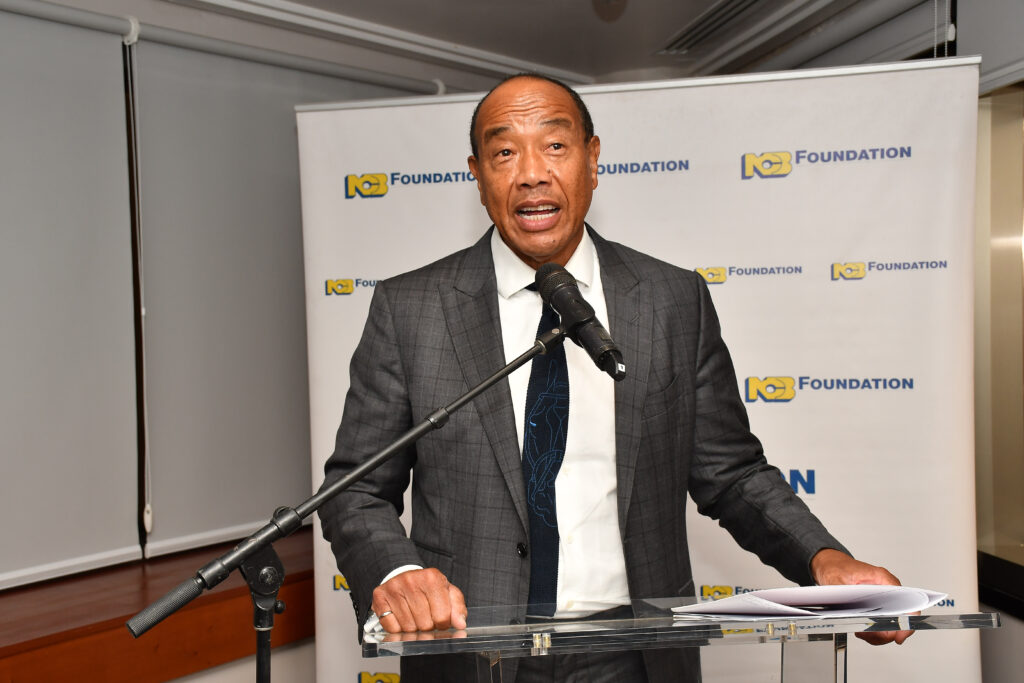
In recent months, the Trinidad Guardian has published a number of damning articles about the chairman of NCB and the bank he acquired some twenty-three years ago.
How Michael Lee-Chin and management teams turned NCB into the leading financial institution in Jamaica is an inspiring account of one of the greatest successes in the financial sector in the post-FINSAC era.
Of late, the NCB Financial Group has endured challenges and is seeking to get back to its heady days. This process will be no quick fix, and as Group CEO Robert Almeida has said, the operation is akin to “retooling and renovating a 747 aeroplane while it is in flight.”
Back in 2023, NCB announced that it was looking to make between J$6 billion and J$8 billion in savings. Since then, its profits have steadily risen and it is back to paying dividends.
While progress has been made, it does have a huge debt overhang which must be addressed.
Last month, NCB announced that it was seeking US$300 million from the international capital markets. It intends to float new senior notes subject to terms acceptable to NCB Financial Group, including pricing. The notes were expected to be priced by June 11 and close shortly after that date. These notes received a credit rating of B+ from Fitch and B- from S&P Global.
In 2022, NCB was able to successfully raise US$300 million on the international capital markets through a private placement arranged by Greyfell Capital Management LLC, which is based in Florida.
NCB is looking to refine existing debt and rebalance its debt portfolio. NCB is reported to have a total debt of somewhere around US$600 million.
The Trinidad Guardian portends gloom, questioning why NCB has been unable to secure the US$300 million as yet and why there has been no news on this raise.
Well, it was announced less than a month ago, and dialogue sometimes takes time. No doubt,t some discussion is taking place around pricing. This sum is more likely than not to come from the United States, which has just come out of the Fourth of July long weekend. It may be a tad premature to speculate that NCB will get no joy going this route.
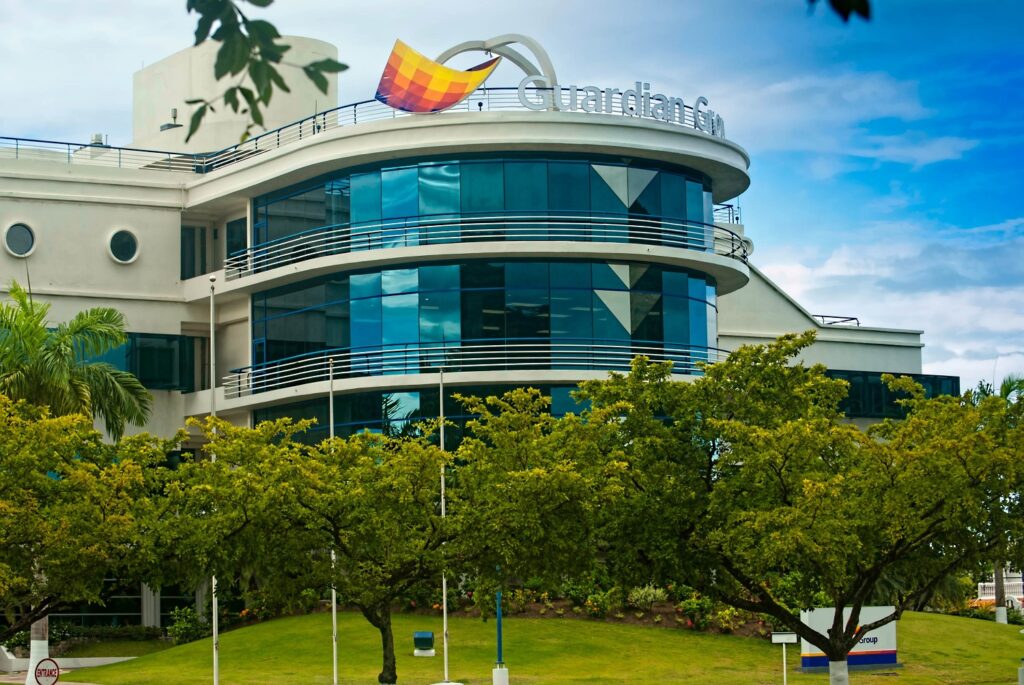
NCB is the largest financial institution in Jamaica and the parent of Trinidad & Tobago’s Guardian Holdings Group, one of the largest insurance players in the region.
NCBJ holds deposits of around J$800 billion. In March of this year, Fitch wrote of NCB: “NCBJ benefits from holding the largest market share in deposits in the country, supported by a well-diversified, low-cost deposit base that makes up 58 per cent of its funding needs, along with proven access to debt markets.
“As of FYE 2024, NCBJ’s funding and liquidity profile was strong with a gross loans-to customer deposit ratio of 80.3 per cent, maintaining a balanced funding structure.
“NCBFG ratings are based on the creditworthiness of its main subsidiary, NCBJ, which is the largest bank in the country by assets and represents 53 per cent of the group’s consolidated assets. NCBFG’s income is mainly derived from dividend income from its subsidiaries.
” NCBFG’s significant double leverage, consistently averaging above 120 per cent, 121 per cent as of FYE 2024, suggests a potentially burdensome level of bank holding company debt service. This factor is a primary reason for the one-notch differentiation from NCBJ. This persistently elevated double leverage results from NCBFG’s growth strategy, which involves acquiring subsidiaries through leveraged means. Through this approach, NCBFG seeks to expand its operational footprint and strengthen its market presence. However, we consider the downward trend in double leverage that has been observed in recent years, indicating a positive move towards reducing financial burdens.
This gives a clear assessment of NCB’s position. It is a behemoth albeit an indebted one that can draw the attention of the international capital markets.
The Guardian articles have elicited panic, and many are questioning Michael Lee-Chin’s ability to come out of this and make a soft landing. The Trinidadian newspaper has questioned whether he can cover his various debt positions and even posits whether he can maintain control of NCB, given the number of shares he has pledged to address outstanding obligations.
The Trinidadian newspaper may be particularly venomous given recent contretemps. Responding to a Trinidad Guardian article last year that Portland (Barbados) had defaulted on a US$23 million bond, of which Trinidad’s Republic Bank is trustee, Michael Lee-Chin refuted the assertion and said he would sue the author.
Speaking to Our Today in May of last year, Michael Lee-Chin said, “This is the lowest form of journalism whereby a so-called journalist can use the platform that he is given to besmirch and desecrate someone’s character without doing their research, their proper research.

“It shows the heights of unprofessionalism, without any thought of consequences. But in this world, karma is always the rectifier. So, I expect The Guardian to do the right thing and to ensure that my reputation is restored to what is was before this immature, unprofessional journalism that has no regard for consequences. I will leave him to his own fate.
“I am also surprised that the principals of Guardian, whom I spoke to and told them that this was absolutely wrong, were so weak that they knew it was wrong and still allowed it to have been written under the pretence of journalistic integrity. Journalistic integrity can only be practised by responsible and mature journalists. That is not what we have here today.”
This may have got the Guardian’s back up and the newspaper may now have hardened its position on Lee-Chin, looking to skewer him every opportunity it gets.
Last week, NCB’s share price was at J$40. Today it has dropped to J$35. The Trinidad Guardian articles may very well have played their part in creating further negativity around NCB. Let’s be clear here, that’s not to say or imply in any way that it is being malicious or looking to besmirch Lee-Chin and NCB. Good journalism should and must prevail.
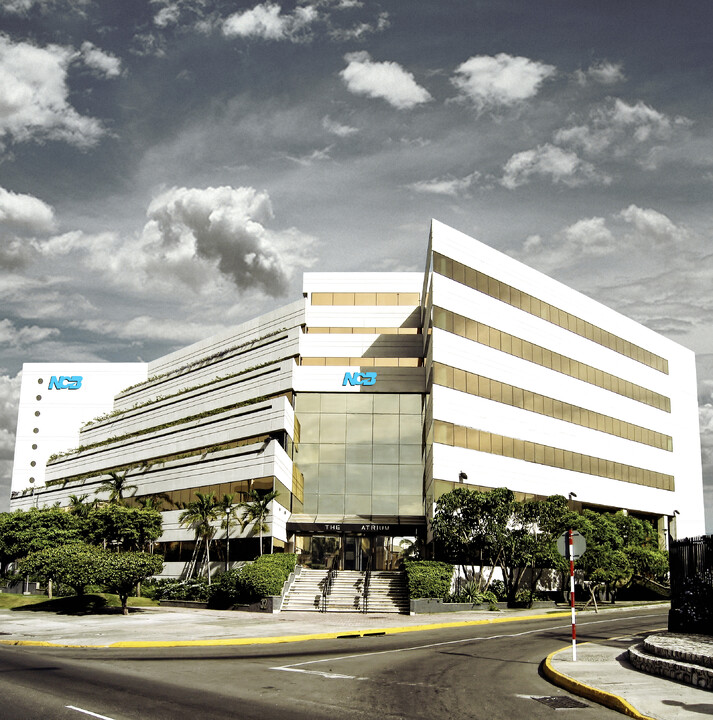
Some have pointed to the lack of coverage by Jamaican media on the Lee-Chin situation and commented on how both Trinidadian and Barbadian media have been far more probing. It may be the case that a wait-and-see approach is taken. Lee-Chin is a maverick and has beaten the odds before, and some are not that quick to write him off just yet.
Rupert Murdoch was on the brink of going under in 1991, needing to refinance US$7.6 billion in debt. After a longer-than-expected period of time, the banks did just that, going further by giving News Corp a US$600 million credit line, which was used for working capital.
“It’s very difficult any time you try dealing with 146 banks to refine US$8 billion in debt. We feel very pleased with ourselves that we concluded it.”
Murdoch’s News Corp took on huge debt by investing in and snapping up a number of media companies, including Triangle Publications, Sky Television, and expanding HarperCollins.
The Australian media tycoon went through hell with the bankers, and he faced the abyss. There were protracted meetings and plenty of negotiating with lenders, not committing the media conglomerate to specific asset sales.
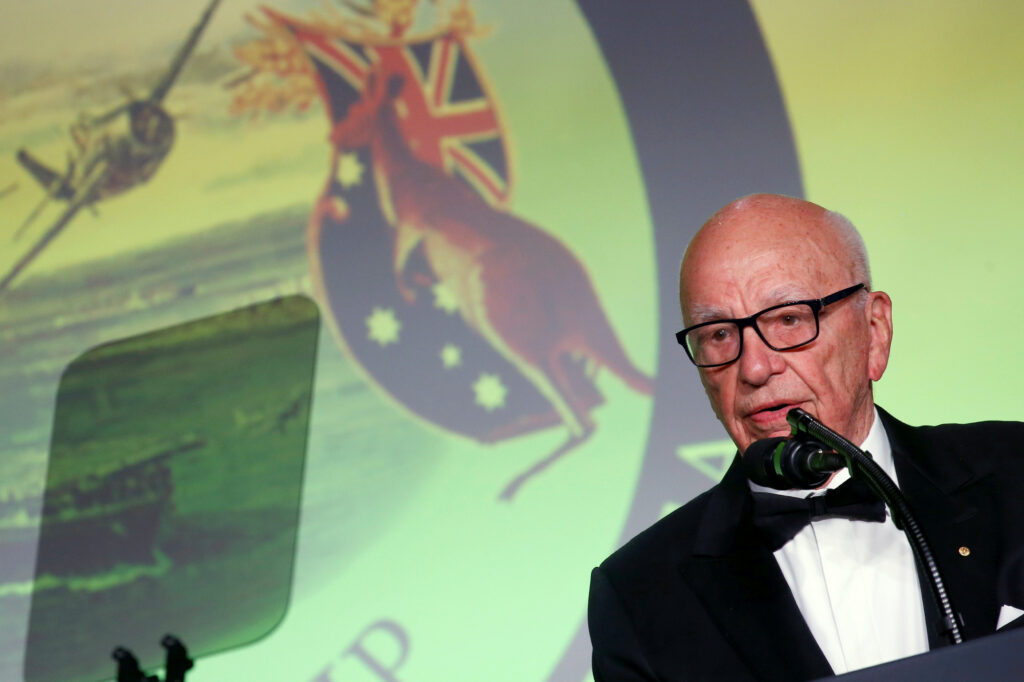
Like telecoms company Digicel (founded by Denis O’Brien), which announced yesterday about its media assets Loop and SportsMax, Murdoch did dispose of some non-core assets.
“We expect to earn our way through this,” declared Murdoch at the time.
He did just that with Fox becoming one of the greatest cable channels of all time.
Michael Lee Chin may be of a similar mind. With continued profits at NCBFG and it being back to paying dividends, he will be looking to earn his way out of this predicament and prove the naysayers and doubters wrong.
Many thought Murdoch dead and buried. He was written off. His mercurial talents saw his media empire thrive and become one of the best in the modern era, spanning cable TV, streaming, newspapers, movie studios, and book publishing-a true media mogul with global interests. He now has an estimated net worth of US$23 billion.
On the bright side, this may be a good time to snap up NCB shares and, as Warren Buffett says, “ Buy, Hold and Prosper”.
Out of every crisis, there is an opportunity. Given the uptick in profitability, NCB’s focus on efficiency, governance, customer experience (EGC) and with a new board and management team, NCB may yet fly out of the turbulence into azure skies.
As Mayberry’s chairman, Chris Berry, said earlier this week, this may be a good time to buy NCB shares, and those who chose to buy into doom and gloom may rue that they didn’t.
The articles, ‘NCBFG struggling to raise US$300 million bond‘, ‘NCBFG could slip out of Lee-Chin’s control‘, ‘Are T&T firms exposed to NCBFG‘, ‘NCBFG APO attracts 50% subscription‘, and ‘NCBFG misses first quarter dividend‘, have led to increased anxiety and impending doom here in Jamaica.
The walls of the impregnable citadel are coming under heavy bombardment, but can it withstand the assault and go on and remain indefatigable?
NCB is Jamaica’s leading financial institution. It was acquired by a mercurial Jamaican who harboured ambitions of creating an institution that could attract the best personnel of the country and could go on to have a regional footprint and make the Caribbean proud.
He did cross the Rubicon, turning NCB into the leading banking house and then went on to acquire a leading regional insurance player, thus straddling the northern Caribbean and another in the southern Caribbean.
Back in 2002, could this have been foretold? Building a legacy is fraught with dangers and requires having the right stuff.



Comments