Dudley Grant: Visionary architect of early childhood education

/ Our Today
administrator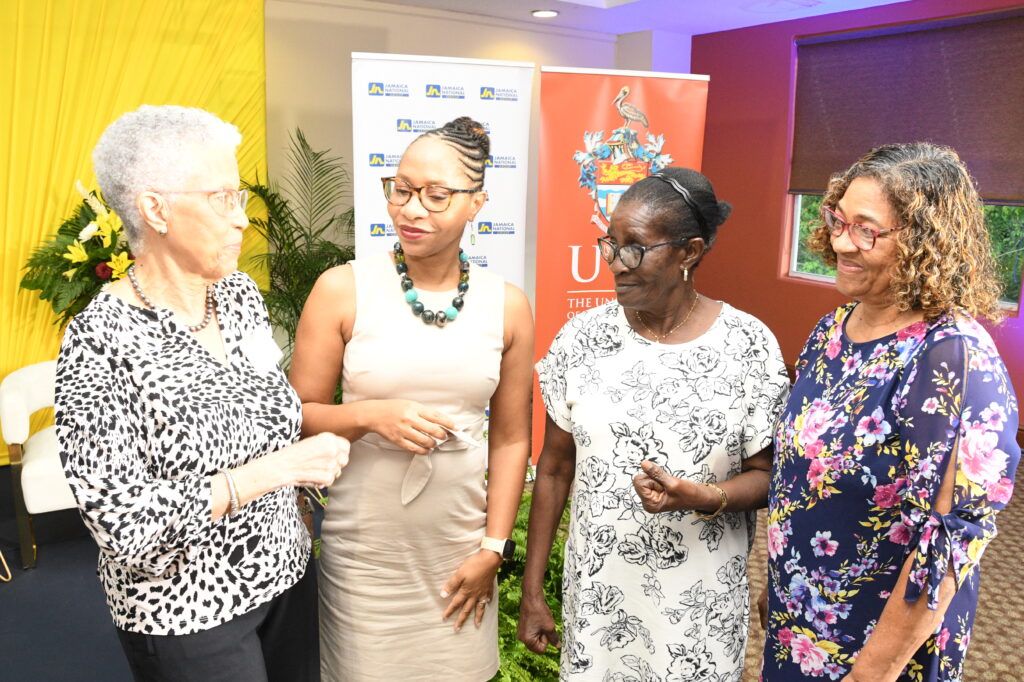
Despite all its ongoing challenges, the current early childhood sector is a far cry from what it was prior to the revolutionary intervention and impact of Dudley Grant.
For more than a century, early childhood education in Jamaica existed as informal and unsupported, despite its critical influence on children’s development. Dudley ‘DRB’ Grant refused to accept this neglect and worked to place early learning at the centre of national development.
Grant, a pioneer of early childhood education in Jamaica, believed that real transformation could be achieved at the early stages of schooling. He insisted that learning had to begin within the communities of the children and in the everyday experiences that shaped their understanding of the world. Through decades of sustained advocacy and hands-on engagement, and with financial support from the Bernard Van Leer Foundation in the Netherlands, he helped to reshape the education sector.
According to Professor Elsa Leo-Rhynie, former chair of the Dudley Grant Memorial Trust, his philosophy for basic schools was anchored in two interconnected concepts: functional interactivity and educare. Functional interactivity, she explained, focused on turning ordinary community life into meaningful learning experiences, while educare emphasised the shared responsibility of parents and caregivers in nurturing children’s development.
“He considered the community to be a living laboratory, so he met the children where they were in their communities,” Leo-Rhynie said. She noted that Grant incorporated cultural activities and placed strong emphasis on play, songs, games and drama, giving children opportunities to draw and express their feelings.

For Grant, education was inseparable from socialisation. Professor Leo-Rhynie pointed out that the interaction between learning and community life and the active involvement of parents and family members were foundational to his model.
These ideas were shaped in part by global developments in the 1960s. Professor Leo-Rhynie noted that Grant was deeply influenced by initiatives in the United States, including the HighScope Perry Project in Michigan and Project Head Start.
Both programmes demonstrated that addressing the emotional, social, health and psychological needs of children from low-income families could help break cycles of poverty. Mr Grant saw parallels in Jamaica’s basic schools that were privately run, loosely organised, and often located in disadvantaged communities. He believed similar strategies could be adapted locally.
Central to that strategy was teacher training. Many basic school teachers, Professor Leo-Rhynie explained, had little or no secondary-level education, yet they possessed deep cultural knowledge and a strong bond with the children they taught. Grant invested in their potential, drawing on their creativity and initiative while equipping them with professional skills to stimulate children’s cognitive, social and emotional development.
Over time, his persistence began to shift national policy. In 1972, the Ministry of Education formally institutionalised Early Childhood Education, and by 1974 an Early Childhood Education Unit was established to guide the expansion of the Project for Early Childhood Education. Education officers were later appointed to oversee and support the programme.
Grant’s influence extended into legislation. The Dudley Grant Memorial Trust participated in the development of and endorsed the Early Childhood Commission Act of 2003, which created a regulatory and legislative framework for the sector. The Early Childhood Commission was officially launched in May 2004, further entrenching early childhood education within national governance structures.
By then, Grant’s reputation had long since crossed Jamaica’s borders. Professor Leo-Rhynie described him as a highly respected international authority who served as a consultant on education projects in countries including the Bahamas, St Lucia, St Vincent, Malaysia, Nigeria, Kenya, South Africa, Colombia, Venezuela and Spain.
Grant’s revolutionary approach and its lasting impact was the subject of reflection at the recent Early Childhood Education Colloquium, where educators, policymakers, researchers and child-advocates from across the region gathered at the University of the West Indies (UWI) regional headquarters.

Professor Errol Miller of UWI’s Institute of Education, in a video presentation shared at the colloquium, described Grant as a transformational force whose approach challenged entrenched thinking.
“The DRB Grant I knew was a hands-on, street-smart, folk-wise, consummate practitioner of the art and science of education,” Professor Miller said. “Dudley Grant was in a category of his own and way ahead of his times.”
His work, Professor Miller added, was “transformative by any standard.”
“He looked at the same system that had operated for over 130 years and saw it differently,” he related. “What was required was not invitation from abroad or imposition from above, but the creation of the people themselves. He understood that lifting early childhood education was the key to lifting the entire society.”
William McLeod, former managing director of Van Leer (Jamaica Ltd.), echoed that sentiment, describing Grant as an astute man, a genius and a giant of his talent.
“He is a ‘Moses’ who led us from the thinking of the 1950s and 1960s into the modern foundations of early childhood education we see today,” McLeod said in a video presentation.
McLeod recalled Grant’s role in establishing a training centre in Nain, St Elizabeth, where basic school teachers received training on weekends. Recognising varying skill levels among trainees, Grant strengthened links with teacher training colleges and helped integrate early childhood education into their programmes. He also supported summer initiatives at UWI that allowed teachers, over successive years, to meet the requirements for bachelor’s degrees in early childhood education.
A founding member of the Institute of Education at UWI Mona in 1963, Grant later became the first director of the Centre for Early Childhood Education when it was established in 1966. In 1996, it was renamed the Dudley Grant Early Childhood Resource Centre in recognition of his significant contribution. The Dudley Grant Memorial Trust, established in 1989 with support from the Bernard Van Leer Foundation, serves as a centre of excellence dedicated to advancing early childhood development across Jamaica.

Born in Colombia in 1915, Grant passed away in 1988. His scholarly output included many manuscripts and monographs. His contributions to the education sector have been recognised through various honours and awards bestowed on him, including the national award Commander of the Order of Distinction (1987) for Outstanding Work in Education.
“Usually, people are forgotten very shortly after they pass, but DRB Grant continues to be remembered because of that vision and that ability to see something differently, to seize the opportunity and to build from the bottom up,” said Professor Miller.





Comments