

Arguments advanced for some EU states to be screened for inclusion

Members of the European Parliament have voted overwhelmingly in favour of adding more nations and territories to its blacklist of non-cooperative jurisdictions in tax matters.
By a vote of 587 to 50, the European Parliament called for criterion to judge if a country’s tax system is fair or needs to be widened; if a country should not be removed from the blacklist if they only make symbolic tweaks. The European parliamentarians also called for criterion whether a zero per cent tax rate policy should automatically lead to being placed on the blacklist and whether the blacklist has to be formalised through a legally binding instrument by end 2021.
Some members of the European Parliament argued for the inclusion of European Union (EU) territories such as the Netherlands, Ireland and Malta. Some also placed emphasis on UK territories. In that regard, focus was placed on The Cayman Islands and British Virgin Islands among others.
Despite the vote, any decision to expand the blacklist rests with the 27 member states on the EU’s Economic and Financial Affairs Council.
EU Parliament explains necessity for criterion to be developed
In a press release following the voting last Thursday, the EU Parliament said the criterion for judging if a country’s tax system is fair or not needs to be widened to include more practices and not only preferential tax rates.
“The fact that The Cayman Islands has just been removed from the blacklist, while running a zero per cent tax rate policy, is proof enough of this,” the press release stated.
“In refusing to properly address tax avoidance, national governments are failing their citizens to the tune of over €140 billion. Especially in the current context, this is unacceptable.”
PAUL TANG, chair of the European Parliament’s subcommittee on tax matters
The press release added that new criteria should be added to ensure that more countries are considered tax havens. For instance, a jurisdiction’s zero per cent corporate tax rate should automatically put it on the blacklist. New rules should also prevent countries from being removed from the tax list “too hastily”.
Describing the current tax list as “confusing and ineffective”, the European parliamentarians argued that, while the European Union’s “list of tax havens”, set up in 2017, has had a positive effect, it has failed to “live up to its full potential as jurisdictions currently on the list covering less than two per cent of worldwide tax revenue losses”.
The chair of the parliament’s subcommittee on tax matters, Paul Tang, stated in a press release on the passing of the resolution that, “in refusing to properly address tax avoidance, national governments are failing their citizens to the tune of over €140 billion. Especially in the current context, this is unacceptable”.
Tang argued that is why the parliament strongly condemned the recent delisting of The Cayman Islands and calls for more transparency and stricter listing criteria. At the same time, he noted that EU countries are responsible for 36 per cent of tax havens.
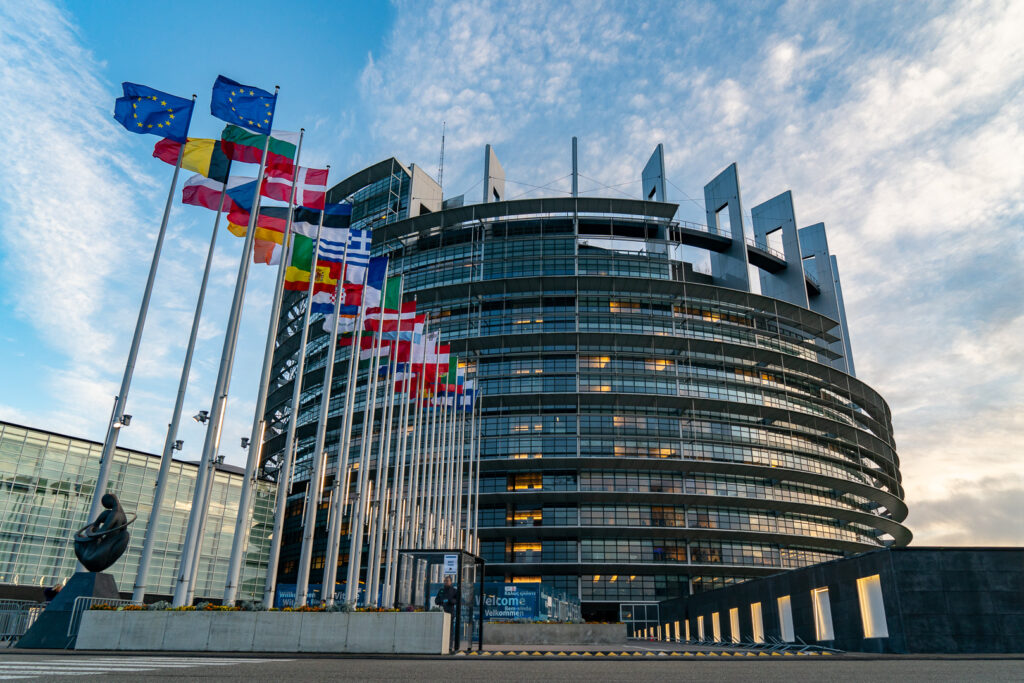
Argument advanced for EU countries also to be screened
As such, he declared that EU member states should therefore also be screened for tax haven characteristics and included in the listing process. The chair of the EU subcommittee on tax matters made the point that being removed from the blacklist should not be the result of “token tweaks to that jurisdiction’s tax system”.
Some European parliamentarians contended that The Cayman Islands and Bermuda were delisted after “very minimal” changes and “weak enforcement measures”. They questioned whether an informal body such as the Code of Conduct Group is able or suitable to update the blacklist.
The resolution, which was passed with a majority of 587 votes in favour, 50 against and 46 abstentions, proposes changes that would make the process of listing or delisting a country more “transparent, consistent and impartial”. The resolution also calls for the listing process to be more transparent and to be formalised through a legally binding instrument by the end of 2021.






Comments