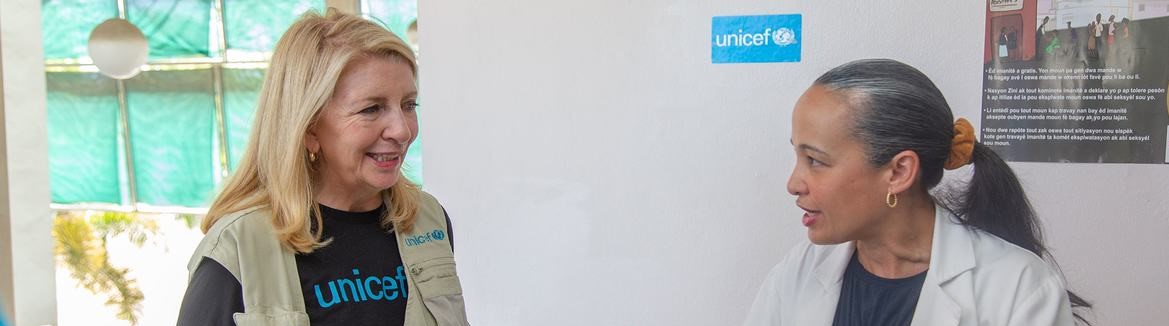

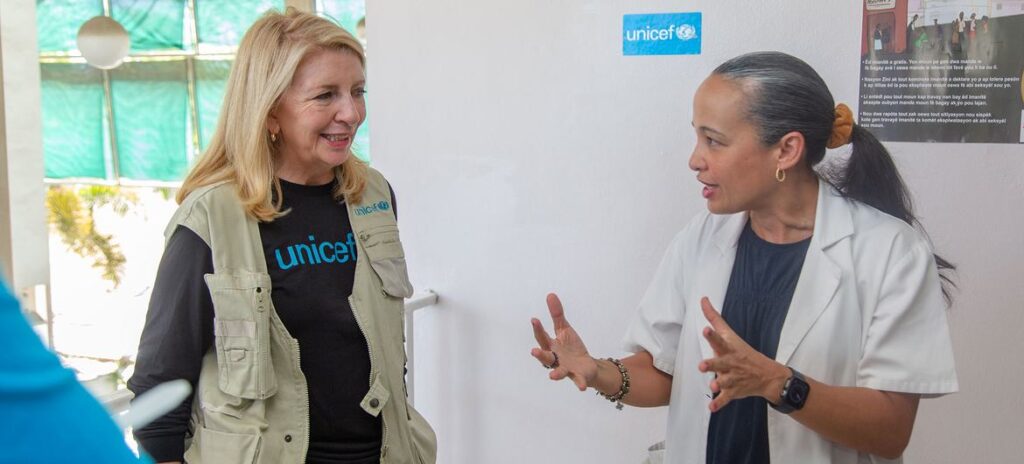
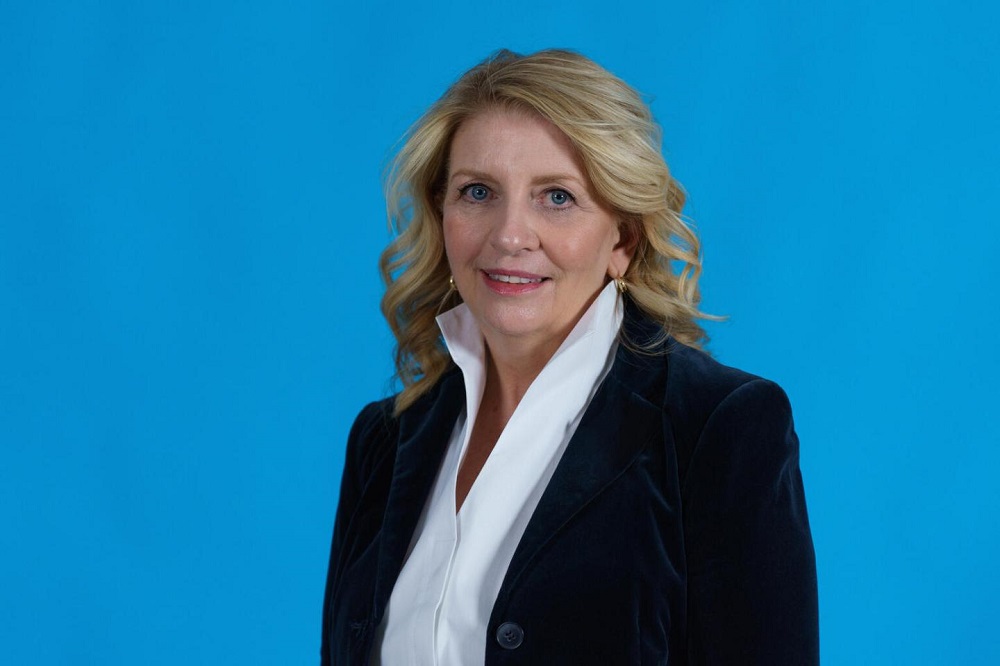
Catherine Russell, executive director of the United Nations International Children’s Emergency Fund (UNICEF) has said that immediate action needs to be taken by the international community to address conditions in Haiti, otherwise, “it’s hard to imagine a decent future” for the Caribbean nation.
She was briefing correspondents on Thursday (June 29) at the UN Headquarters in New York, a few days after visiting Haiti along with the head of the World Food Programme (WFP), and said that that the current situation of insecurity is unacceptable.
“Women and children are dying. Schools and public spaces should always be safe. Collectively the world is failing the Haitian people,” she added.
‘Barely functional’

An estimated 5.2 million – close to half the population – need humanitarian support, including three million children.
Institutions and services children rely on “are barely functional” Russel warned, while violent armed groups control more than 60 per cent of the capital Port au Prince, and parts of the country’s most fertile agricultural areas.
“Haitians and our team there tell me it’s never been worse” she said, with unprecedented malnutrition, grinding poverty, a crippled economy, and a continuing cholera outbreak.
All this “while flooding and earthquakes continue to remind us just how vulnerable Haiti is to climate change and natural disasters,” she added.
An 11-year-old girl told me in the softest of voices that five men had grabbed her off the street. Three of them raped her. She was eight months pregnant when we spoke – and gave birth just a few days later.
Catherine Russell, executive director of UNICEF
Raped and burnt alive
The UNICEF chief recounted some of the shocking testimony she had heard talking to women and girls at a centre for survivors of gender-based violence, which has now reached “staggering levels”.
“An 11-year-old girl told me in the softest of voices that five men had grabbed her off the street. Three of them raped her. She was eight months pregnant when we spoke – and gave birth just a few days later,” Russell shared.
Additionally: “One woman told me that armed men had barged into her house and raped her. She said her 20-year-old sister resisted so strongly that they killed her by setting her on fire. Then they burned down their house.”
The head of UNICEF said she had heard many similar stories, “part of a new strategy” by armed groups.
“They rape girls and women, and they burn their homes to make them more vulnerable and more easily controlled. Because if they break the women, they’ve broken the foundation of the communities.”
Room for hope
Russell said that amid the horror, there had been “some hope” in the form of extraordinary teachers, health workers, paediatricians, and young people.
“A 13-year-old girl, Serafina, told me that she picked doctor as a profession because ‘I love when people take care of other people’. These children are what the parents of Haiti are pinning their hopes on. We should all be doing the same,” she said.
The UNICEF chief said she was very proud of the UN humanitarians doing their best on the ground, most of the Haitians. “Many have had to move homes, some multiple times, to find safety from the violence and kidnappings for ransom.”
Act now
She said a bare minimum of $720 million is needed for humanitarian support but less than a quarter of that had been received.
Russell also outlined urgent steps she said need to be taken, including providing immediate extra funding and a better response, a long-term and sustained humanitarian effort, preparedness and resilience-building for natural disasters to come and improved protection for humanitarians.
Send feedback to [email protected]




Comments