
House approves amendments expanding eligibility for criminal record expungements

/ Our Today
administrator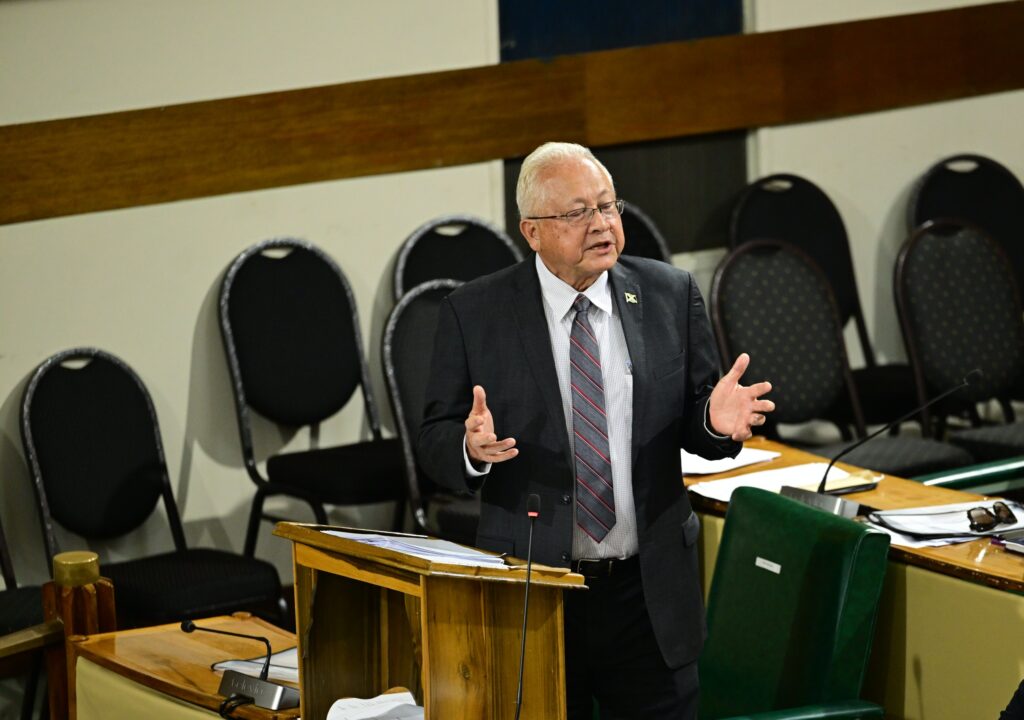
The House of Representatives on Tuesday approved amendments to the Criminal Records (Rehabilitation of Offenders) Act, expanding access to expungement in potentially deserving cases.
Closing the debate, Minister of Justice and Constitutional Affairs, Delroy Chuck, underscored the need to relax certain provisions of the Act, thereby allowing more individuals convicted of offences the opportunity for a second chance.
“There are persons who believe that once you have been convicted, you should carry that taint for the rest of your life. I speak to the country to say that many persons commit crimes, not because they planned it but sometimes just an awful moment of madness, a bad discretion, a poor judgment, and they engage in some form of criminality,” he stated. “But the truth of the matter is that the vast majority, perhaps more than 90 per cent of persons who have been convicted for crime, it is the one and only offence. Therefore, it is really important that those persons who feel that no one should get a second chance…reconsider their position.”.
Chuck urged members of the Lower House to support the Bill, noting its major reforms will provide hundreds of thousands of individuals with the opportunity to have their convictions expunged.
“I am aware that there are many others who will be denied, even after this Bill is passed, but we need to send a signal that it is the first step. And in a situation in Jamaica where you have serious crimes, if we start to expunge the records of persons who have committed serious offences, we could send the wrong signal.
“We need to bring the crime rate down. We need to make Jamaica a peaceful society. We need to get murders down so that when we come with the next set of amendments, we don’t have people quarrelling and saying, ‘look at what the House is doing, giving criminals another leeway’,” he added.
The minister explained that expungement is intended for individuals who have demonstrated that they have moved beyond their past offences. “In other words, we have a period of rehabilitation, whether it is three years, eight years, or 15 years. The point is that the expungement committee is unlikely to expunge a crime unless they are convinced that the person has put crime behind them,” Chuck said.
“To the best of my knowledge, I have known of no case where a person has committed a crime, having been given a second chance. So this opportunity is to give more persons a second chance. If we can just get the signal to the rest of the society that we need to keep and get crime under control… once it is continuous… then we can give more convicted persons a second chance,” he added.
Among the provisions of the Bill is Clause Two, which amends Section Three to increase the sentence threshold for eligibility for expungement from five years to 10 years.
The provision empowers the Criminal Records Rehabilitation of Offenders Board to consider applications from individuals who served sentences of more than five years but not exceeding 10 years, thereby broadening access to expungement in potentially deserving cases.
Clause Eight establishes a non‑exhaustive list of factors that the Board may consider when assessing an application.
These include the nature and gravity of the offence, social enquiry and psychological reports, demonstrated remorse or restitution, and the age of the individual at the time of the offence. This framework ensures that the Board’s decisions are grounded in transparency, fairness, and clear evidence of rehabilitation.
Clause Nine amends Section 28A to introduce automatic expungement for certain old, non‑custodial convictions. Specifically, it applies to offences with non‑custodial sentences imposed and satisfied before January 1, 2005, where no subsequent conviction has occurred.
This provision acknowledges that individuals with minor, dated convictions should not be required to carry that burden indefinitely, nor undergo the expungement process to clear their record.
Clause 11 expands the Board’s composition from between three and five members to between seven and nine members, with quorum requirements adjusted accordingly. The provision also updates the list of prescribed members, incorporating nominees from the Commissioner of Police and the Commissioner of Corrections. This ensures that the Board is adequately resourced to meet its expanding responsibilities.
Clause 12 amends the list of offences excluded from expungement, removing certain minor property offences as well as offences under the Dangerous Drugs Act.
This aligns with the example set in The Bahamas and reflects the broader international shift towards recognising the redeemability of individuals.






Comments