Jamaica begins digital switchover January 2022 after 13-year wait

/ Our Today
administratorInformation Minister outlines schedule in Parliament
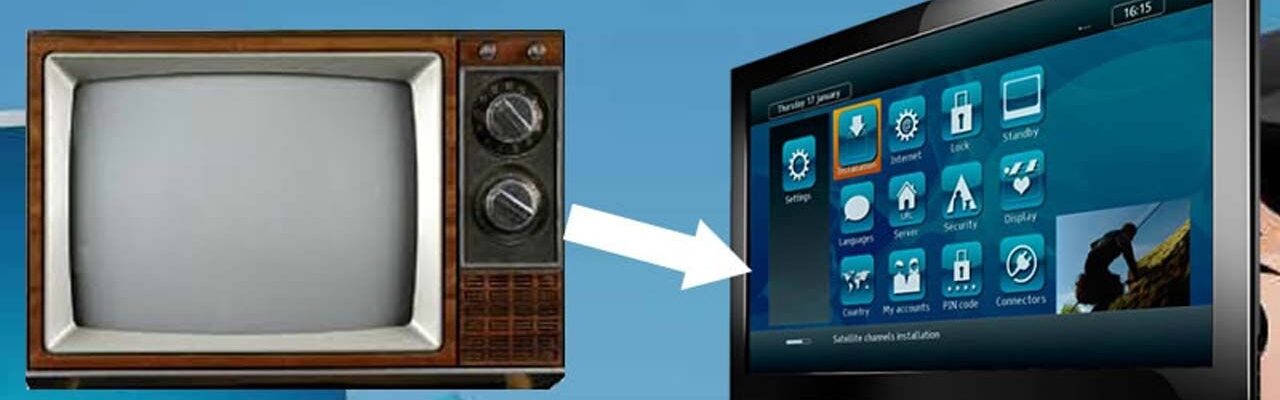
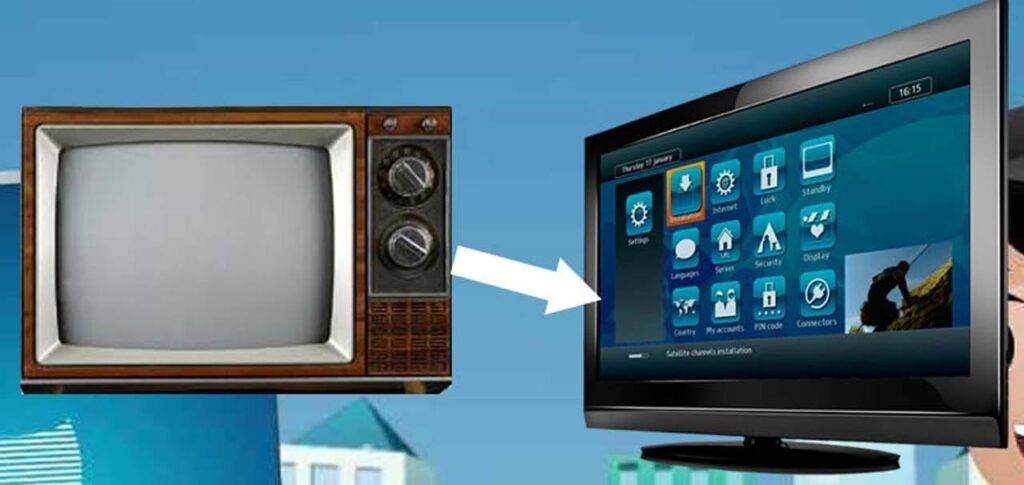
After 13 years of waiting, Jamaica is set to join the rest of the world in beginning the transition to digital TV, or what is popularly referred to as the digital switchover (DSO).
The transition will be done in stages, as of January 2022, with an initial focus on the main urban centres.
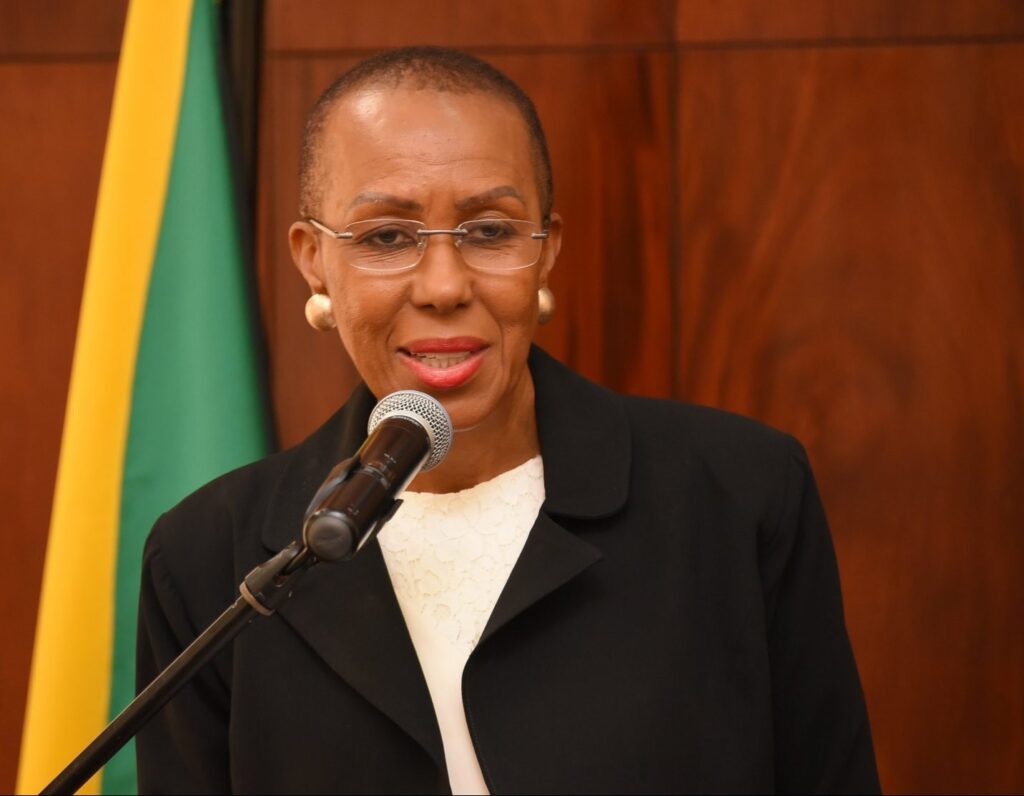
Information Minister Fayval Williams, who made the announcement in a statement to Parliament Tuesday evening (January 26), disclosed that broadcasters would be allowed at least one year of simultaneous digital and analogue broadcasts. This is being done to allow them time to change their equipment and test the new systems.
As such, the analogue switch-off is set for January 2023.
To support the implementation of DSO, Williams announced the formation of three specialist units, a National DSO Steering Committee, a technical and regulatory team and a project management office.
Mandate of the specialist units
The National DSO Steering Committee will oversee the management and timely delivery of DSO, national communication for DSO and will make any recommendations for legislative and regulatory changes necessary. This committee is chaired by the information minister with her deputy being Robert Nesta Morgan, the stated minister for information.
The other members will be drawn from representatives from the Information Ministry; Office of the Prime Minister; Ministry of Science, Energy and Technology; Broadcasting Commission; Spectrum Management Authority (SMA); CVM Television; Television Jamaica; Love Television, Public Broadcasting Corporation; Columbus Communications; Digicel ; Jamaica Association of Community Cable Operators; National Consumers’ League; Combined Disabilities Association and the Anti-dumping and Subsidies Commission.
The technical and regulatory team will oversee frequency planning and coordination and will address legislative and regulatory issues. In addition, this team will oversee the licensing regime for broadcast television licensees and the new multiplex operator.
The team will also engage with the general public, broadcasters, retail industry and other stakeholders around the DSO process and what will be required. This team will be chaired by the executive director of the Broadcasting Commission and include technocrats from the information ministry and the SMA.
A Project Management Office is being established in the Broadcasting Commission to provide project management support including the development of DSO/ASO plan and to coordinate and interface with stakeholders in the DSO process. This office will also interface with the SMA to coordinate the analogue switch-off, coordinate discussion and facilitate co-operation and collaboration in transitioning transmission network from analogue to digital.
Broadcasting Act being amended to allow smooth DSO implementation
Williams stated that: “the Ministry is also working to finalise the Electronic Content and Media Policy and amendments to the Broadcasting Radio Re-diffusion Act, which will allow for the smooth transition of DSO. The switch to digital television services with the new multiplex and new business arrangements will require reviewing the existing licensing framework.”
The SMA will complete a full-scale frequency planning exercise before DSO, including a policy and standards document to guide the development of the multiplex. The information minister announced that the Government will be issuing a request for proposal for a public-private Multiplexor.
This, she believes, will be good for the industry in terms of significantly reducing capital spending that individual entities in the industry would have to outlay.
“…Existing broadcasters that currently operate their own transmission networks will be allowed to continue to do so subject to their submission for regulatory approval of a ‘Promise of Performance’ for the services to be offered, along with a technical plan and evidence of adequate financing.”
Fayval Williams, minister of education, youth and information
Williams made the point that the administration is not mandating the incumbent to use this model.
She was quick to point out that “existing broadcasters that currently operate their own transmission networks will be allowed to continue to do so subject to their submission for regulatory approval of a ‘Promise of Performance’ for the services to be offered, along with a technical plan and evidence of adequate financing”.
The information minister added that broadcast licences must specify mandatory carriage for a specified level of free-to air and public service broadcasting, noting that provision must be made for the inclusion of at least one government-designated public broadcasting service to be provided on a cost-recovery basis.
DSO good for Jamaica
She argued that the digital switchover for Jamaica will position the country as a leading technology-enabled society in the Caribbean thus bringing Jamaica closer to achieving its goal of becoming a digital economy.
She noted that the digital switch will free up valuable portions of the broadcast spectrum, which can then be used for other purposes, such as for advanced wireless services, for dedicated educational channels, public and safety services and other applications.
For example, broadcasters could dedicate some of the excess capacity to educational programmes for each grade level during school hours without interrupting their regular programming.
The information minister added that Jamaicans, who do not have access to getting TV via cable or the Internet will now be able to enjoy more channels with better quality with their over-the-air TV when this switch to digital is complete.

Discussion about the DSO process started a long time ago – in 2003 in fact – as part of the Government of Jamaica’s wider policy imperative to update Jamaica’s broadcasting and media sector.
The DSO National Steering Committee was established in February 2009 to spearhead Jamaica’s digital switchover process. The committee produced their report on the ‘Recommendations on Digital Terrestrial Television Switchover in Jamaica’ in March 2014.
New digital standards approved by Cabinet
- Television presentation format will be high definition standard technology that will provide significant improvements in the quality of what Jamaicans will see on their over-the-air TV’s.
- For video compression technology, we have decided on MPEG-4 (Moving Picture Experts Group (MPEG)-4) which can provide twice as many programs in a given transmission channel.
- For transmission standard, after assessing all the transmission standards that exist globally, Jamaica has settled on the North American standard, the Advance Television Systems Committee. Most of the televisions in Jamaica come from the US and so it will be easier to make the switch.
- Jamaica has also settled on the notion of a single multiplex operator for which an open, competitive and transparent process will begin. Multiplexing is where multiple signals are transmitted over a common channel, thus making the entire broadcast system much more efficient.
A single multiplex system for all the stakeholders in the broadcast industry will significantly reduce the capital outlay that they each require to accommodate the digital switch over. So instead of everyone putting up towers and antennas, they can utilise this one system.
Such a reconfiguration of the industry will result in increased television coverage for all Jamaicans. The Minister explained that utilizing a single infrastructure for broadcasting TV will significantly reduce the cost to broadcasters including the cost of electricity to power the many towers, thus allowing them to expand coverage to parts of the country that would never get coverage in 100 years.
All that will be possible now with digital switchover.


Comments