
Lilia Burunciuc | Passing the Test: Hurricane Melissa and the Caribbean’s Resilience

/ Our Today
administrator
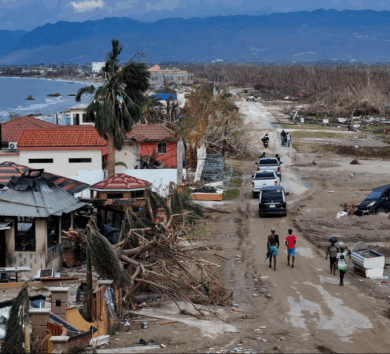
As another hurricane season draws to a close, the collective exhale that sometimes follows never came. Hurricane Melissa tore through Jamaica, leaving the country reeling. Homes and schools were destroyed, roads and hospitals damaged, and countless families displaced. The scale of the devastation is heartbreaking—and the recovery will take time, resources, and resolve.
In Kingston, where I’m based, I’ve seen that resolve everywhere—in neighbours helping more rural neighbours, in local authorities working through exhaustion, and in volunteers driving lengths to deliver critical supplies. This spirit of solidarity runs deep in the Caribbean. It has carried the region through every hurricane season, and it will carry Jamaica through this one.
But Melissa also showed something new. This time, the familiar story of strength and recovery was matched by preparedness. Behind the scenes, years of investment in resilience paid off. Jamaica was better equipped – financially and institutionally – to act quickly when disaster struck. Within days of landfall, the government received a US$91.9 million payout from the Caribbean Catastrophe Risk Insurance Facility (CCRIF), providing much-needed liquidity for early response. A larger disbursement—US$150 million from Jamaica’s catastrophe bond, arranged with the support of the World Bank.
This ability to mobilise resources quickly did not appear overnight. It reflects a regional architecture the Caribbean has been building for more than a decade. Countries now rely on a mix of tools—from Catastrophe Deferred Drawdown Options to Contingent Emergency Response Components and Rapid Response Options, insurance schemes, and catastrophe bonds—that provide financing at different moments of a crisis. Together, they form a more predictable and diversified system for responding to shocks.
At the same time, countries are strengthening the systems that determine how well those resources are used. Governments are improving risk governance, integrating climate considerations into budgets, and tightening fiscal frameworks so that recovery is faster and reconstruction more sustainable.
Institutional capacity has also become a central focus. Countries are investing in data platforms that track hazards, early-warning systems that reach more people, and coordination mechanisms that allow agencies to work together under pressure. These investments ensure that preparedness is not only financial, but also operational.
The result is a shift in how the region approaches risk. Climate and disaster considerations are no longer confined to environment ministries; they guide national planning, investment decisions, and development strategies. It is one of the most significant changes I have seen in my years working alongside Caribbean governments.
Hurricane Melissa, however, reminds us that this work is never finished. To stay ahead of growing risks, countries will need to keep strengthening what they have built. Three priorities stand out.
1. Greater private-sector engagement. Governments cannot carry the full cost of resilience. Insurance coverage remains low, and access to affordable finance for resilient housing and small businesses is limited. Financial institutions can help by offering incentives for climate-smart investments and expanding resilience-linked lending that encourages adaptation.
2. Maintenance and sustainability. Building resilient infrastructure is only the beginning; maintaining it ensures protection endures. Including maintenance costs in national budgets and involving communities in caring for public assets can safeguard investments over time.
3. Data and foresight. Strong disaster-risk data and early-warning systems are essential. Regional platforms like CDEMA’s hazard-monitoring network and the OECS Environmental Information System are valuable foundations. Integrating these tools with national planning and fiscal systems will ensure that risk information guides every major decision.
Across Jamaica and the wider Caribbean, the determination to rebuild is matched by a commitment to prepare. Our shared task now is to keep building on this momentum, so that when the next storm comes, it finds the Caribbean stronger, more united, and better prepared than ever before.




Comments