
Minister Williams announces SLB Debt Reset Programme

Toriann Ellis / Our Today
author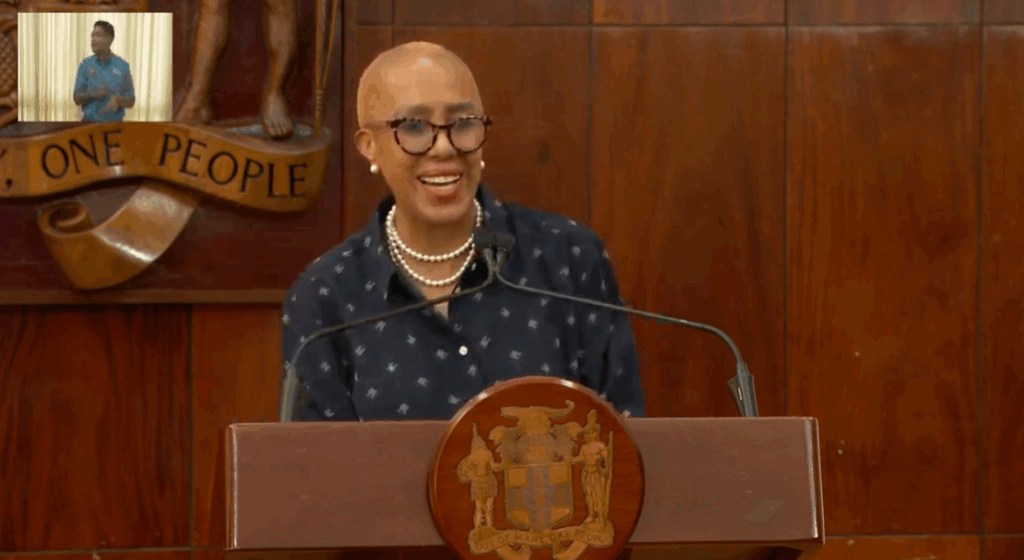
Minister of Finance and the Public Service Fayval Williams has announced the Student Loan Bureau (SLB) Debt Reset Programme, which aims to assist students in reducing their loan balances and eliminating accumulated charges.
Williams said this was an initiative that the government announced before the September 3 general election. “It’s one of our election commitments, and I am proud to say that despite Hurricane Melissa, despite everything that has happened, we’re here today to announce this Debt Reset and the new face of the Student Loan Bureau,” she said.
She expressed that the Student Loan Bureau has been revamped with new offices and new information technology. “The SLB’s recent relocation and rebranding mark an important step in its transformation into a more modern, customer-centric institution. It reflects who the organisation is today. Innovative, resilient and dedicated to meeting the evolving needs of the stakeholders. To date, SLB has assisted over 350,000 students valued at approximately $65 billion,” Williams said.
The finance minister noted that over the years, the government of Jamaica, through the Student Loan Bureau introduced a range of policies designed to remove barriers to tertiary education and make loan repayment more manageable for students.
“These initiatives include reductions in interest rates, advanced benefits for beneficiaries and the removal of the guarantor requirement for loan approval. Additionally, the extension of loan tenures has helped to lower monthly payments, giving our customers more disposable income.
“The targeted loan tenure now ranges between 15 and 20 years. It used to be way shorter in the old days, and you have the Pay As You Study (PAYS), you have the postgraduate product that’s set at 10 years,” she continued.

Debt Reset Programme Benefits
Executive Director of the Student Loan Bureau, Nickeisha Walsh, said the SLB, through its mandate, played a critical role in advancing national human capital development.
“To date, our interest is as low as 3 per cent, moving from as high as 16 per cent. At this stage of our transformation, the next critical step is advancing our digital capabilities to improve access, enhance communication channels, and strengthen partnerships across the education ecosystem.”
Walsh introduced the new STEEP Customer Portal, where students can go online, access their account, and will be able to pay their loans. “You will also be able to view your loan date, your details, and also print statements. The student will be able to go on the website and access this landing page.”
This onboarding platform will ensure that the SLB will be able to access information from the students.
A typical statement will show loan information, repayment start date, the tenure of the loan, the interest arrears, if any, and the closing balance to close that loan.
“To date, the SLB has 35,360 loans in our active portfolio. 8,890 are current, 11,634 are delinquent, and we have 4,836 loans in moratorium. So the Debt Reset Programme is an opportunity for our students to reduce their loan balances, eliminate accumulated charges, and establish a more sustainable path towards repayment. This initiative supports customers, both in good standing and those in arrears,” Walsh said.
The executive director noted that the SLB will pull on the loan portfolio to determine how many of the students are active. “This programme runs between December 1, 2025, and April 30, 2026. What it will do, it will allow the students to clear their arrears by SLB offering a 50 per cent waiver on your interest arrears, 100 per cent waiver on your charges, and 100 per cent waiver on your insurance fees. And the student will be able to close this within five months.”
Another benefit of the Debt Reset Programme is that students who are in good standing will be given $100,000 to be applied to their loan accounts.
“This is about encouraging them to continue to be good customers. Once you are in the Debt Reset Programme, and after a year, if you continue to become current, the SLB also offers a 2 per cent interest reduction in your interest rate. So this will allow students now to reduce their repayment costs and also get an opportunity to have more disposable income,” she added.


Comments