Private businesses power China’s tech-driven industrial transition

/ Our Today
administrator
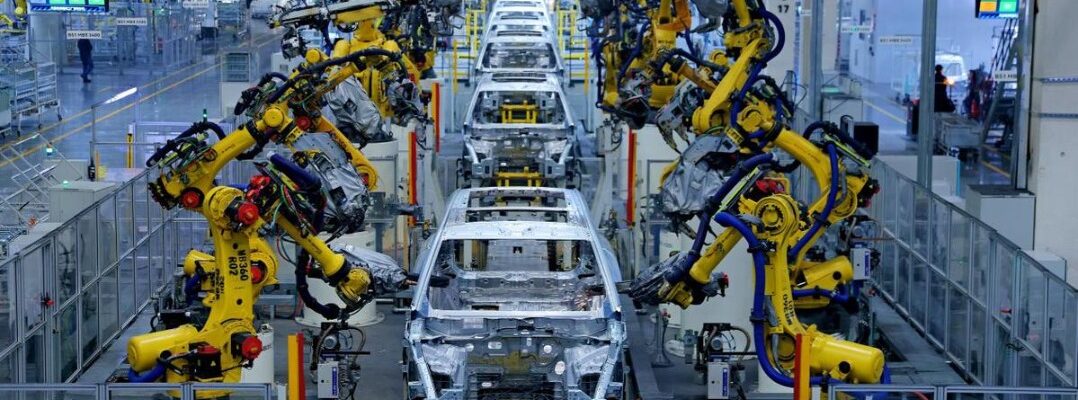
In a high-tech factory workshop, over 1,600 intelligent terminals and 3,000 robots work in concert, rapidly welding and painting as smart, connected vehicles roll off the production line.
This is the scene at a super factory of Seres Group, a technology-based manufacturing enterprise with new energy vehicles (NEVs) as its core business, located in southwest China’s Chongqing Municipality.
“We are now deeply engaged in the high-end intelligent NEV sector, with three super factories built,” said Zhang Xinghai, founder and chairman of the group, adding that the group’s revenue surpassed ¥110 billion (US$15.5 billion) in the first three quarters of 2025, with more than 300,000 NEVs sold.
Seres’ rapid growth is a snapshot of the vigour that private businesses are injecting into the country’s economy. In Chongqing, the private sector’s added value surged from ¥1.48 trillion to ¥1.98 trillion during the 14th Five-Year Plan period from 2021 to 2025. Its share of the local GDP also climbed, up from 59 per cent to 61.6 per cent.
Like in Chongqing, Chinese private firms across the country are diving into advanced sectors like intelligent manufacturing, digital economy and green energy, leveraging digital technologies such as 5G and cloud computing to align with development strategies.
Since first investing in Chongqing in 2010, Huafon Group, a private enterprise specialising in new chemical materials, has invested over ¥26 billion, establishing world-class production facilities, including the world’s largest adipic acid production base and the largest single-site spandex plant globally.
To date, the group’s operations in Chongqing have generated a total output value exceeding ¥200 billion, while it has paid nearly ¥30 billion in taxes.
“Our digital transformation in recent years has been pivotal in moving our industrial, product and value chains upscale, allowing us to build a vibrant new materials industrial ecosystem,” said You Feiyu, chairman of the group.
China will enhance the overall performance of its innovation system, raise its innovation capacity across the board, strive to take a leading position in scientific and technological development, and keep fostering new, quality productive forces, according to a communique issued last month after the fourth plenary session of the 20th Central Committee of the Communist Party of China.

Data showed that private enterprises contributed over 70 per cent to China’s new technological innovations in 2024.
A supportive innovation ecosystem is key to nurturing such growth, with different provinces strengthening policies to improve their business environments and facilitate financing for private companies.
For instance, Shaanxi Province in northwest China and Chongqing have both recently rolled out detailed measures to support high-quality development in the private sector, focusing on digital transformation and tech innovation.
This policy backing is yielding tangible results. The Global Chongqing Entrepreneurs Conference held earlier this week drew participants from more than 50 countries and regions, securing contracts worth ¥56.7 billion in cutting-edge fields like smart manufacturing, AI and NEVs.
Wang Zhiyong, chairman of HKC Corporation, said the company, a global innovator in semiconductor display technologies, will build smarter, greener production lines in Chongqing.
“We hope to join hands with numerous enterprises to paint the backdrop of high-quality development here,” said Wang.






Comments