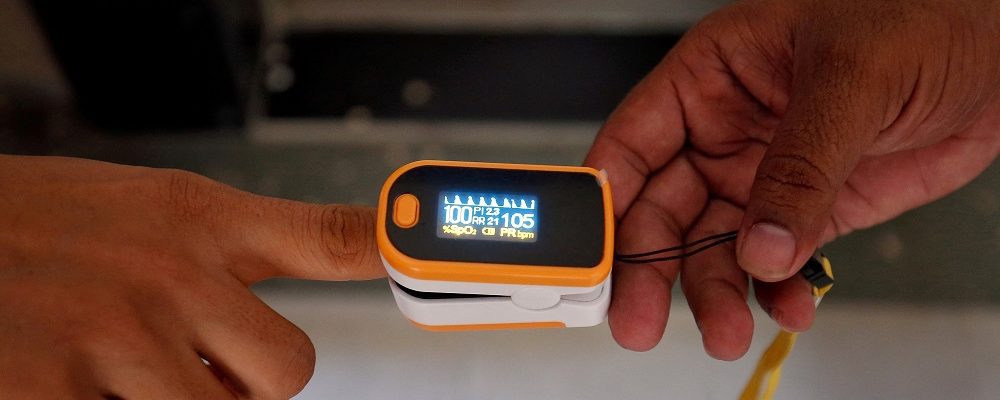
Pulse oximeters leave non-white ICU patients getting less oxygen treatment than needed: Study

/ Our Today
administrator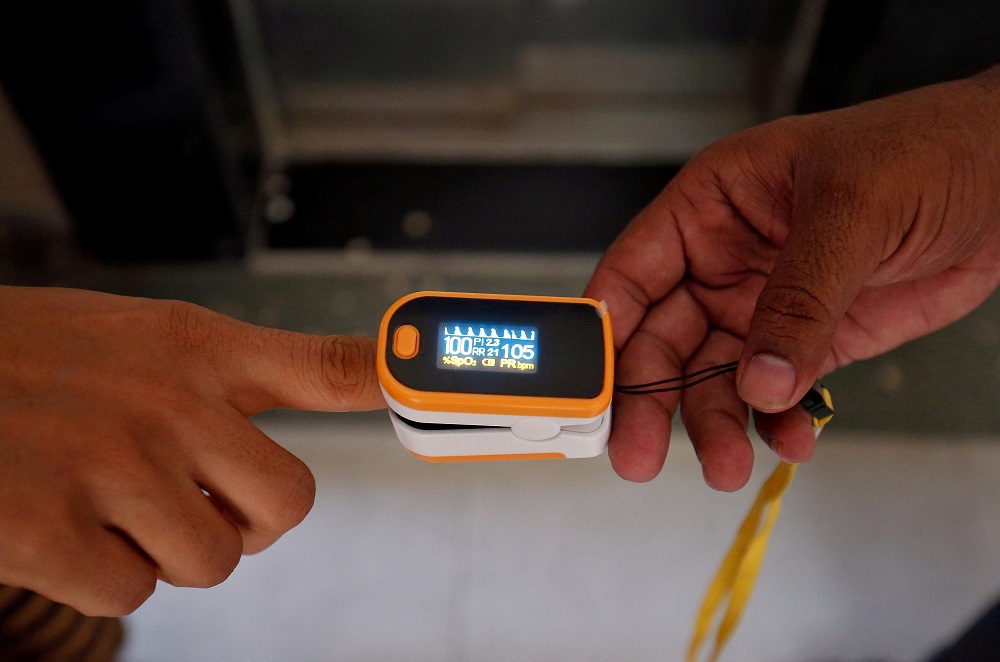
(Reuters)
A flaw in a widely used medical device that measures oxygen levels causes critically ill Asians, Blacks and Hispanics to receive less supplemental oxygen to help them breathe than white patients, according to data from a large study published today (July 11).
Pulse oximeters clip onto a fingertip and pass red and infrared light through the skin to gauge oxygen levels in the blood. It has been known since the 1970s that skin pigmentation can throw off readings, but the discrepancies were not believed to affect patient care.
Among 3,069 patients treated in a Boston intensive care unit (ICU) between 2008 and 2019, people of color were given significantly less supplemental oxygen than would be considered optimal compared to white people because of inaccuracies in pulse oximeter readings related to their skin pigment, the study found.
“Nurses and doctors make the wrong decisions and end up giving less oxygen to people of color because they are fooled.”
Dr Leo Anthony Celi of Harvard Medical School and the Massachusetts Institute of Technology
“Nurses and doctors make the wrong decisions and end up giving less oxygen to people of color because they are fooled” by incorrect readings from pulse oximeters, said Dr Leo Anthony Celi of Harvard Medical School and the Massachusetts Institute of Technology, who oversaw the study.
For the study, pulse oximetry readings were checked against direct measurement of blood oxygen levels, which is not practical in the average patient because it requires a painful invasive procedure.
Researchers saw “occult hypoxemia” – an oxygen saturation level below 88 per cent despite pulse oximeter readings of 92 per cent to 96 per cent – in 3.7 per cent of blood samples from Asian patients, 3.7 per cent of samples from Black patients, 2.8 per cent of samples from non-Black Hispanic patients versus just 1.7 per cent of samples from white patients, according to the report published in JAMA Internal Medicine.
Whites accounted for only 17.2 per cent of all patients with occult hypoxemia at some point during their hospital stay.
OBESITY AMONG OTHER ISSUES AFFECTING PULSE OXIMETRY
A separate team reported recently in the same journal that racial and ethnic biases in pulse oximetry accuracy have resulted in delayed or withheld treatments among Black and Hispanic patients with COVID-19.
Pulse oximetry can also be affected by obesity, medications used in critically ill patients, and other factors, Celi said.
Imarc Group market research firm forecast the global pulse oximeter market reaching US$3.25 billion by 2027, following 2021 sales of US$2.14 billion.
“We think it’s very reasonable at this point to call upon purchasers and manufacturers to make changes (to the devices), Dr Eric Ward, coauthor of an editorial published with the study, told Reuters.




Comments