
UNDP, EFJ join forces to upscale up CSO financing opportunities on climate action and ecosystem resilience

/ Our Today
administrator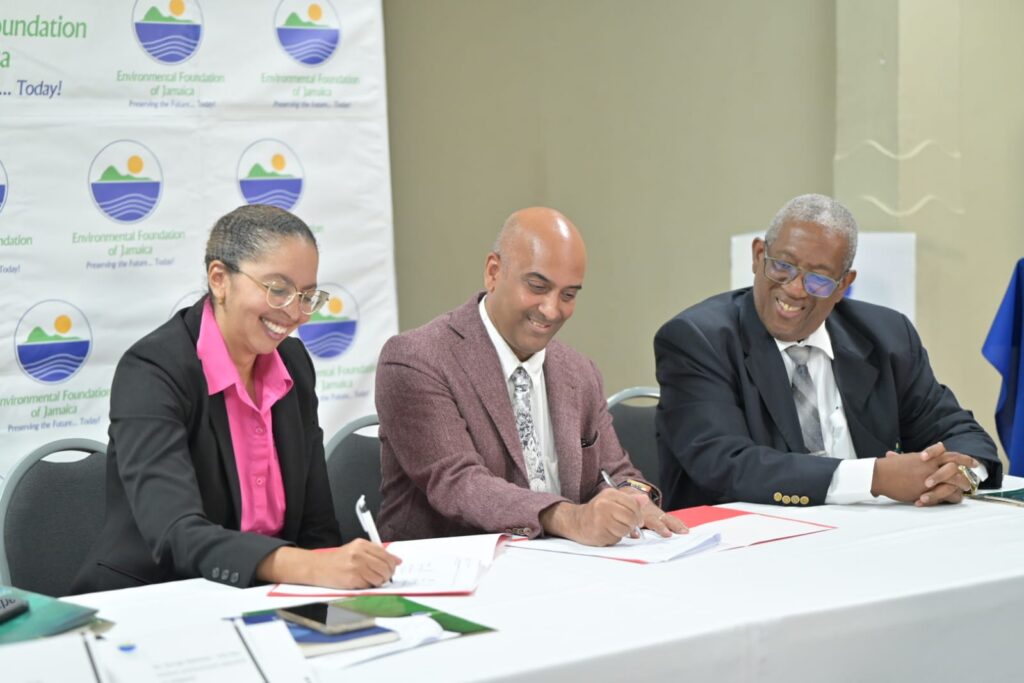
Another milestone in innovative partnerships for environmental sustainability was established when the United Nations Development Programme (UNDP) and the Environmental Foundation of Jamaica (EFJ) officially joined forces on Jamaica’s national climate and ecosystem resilience priorities.
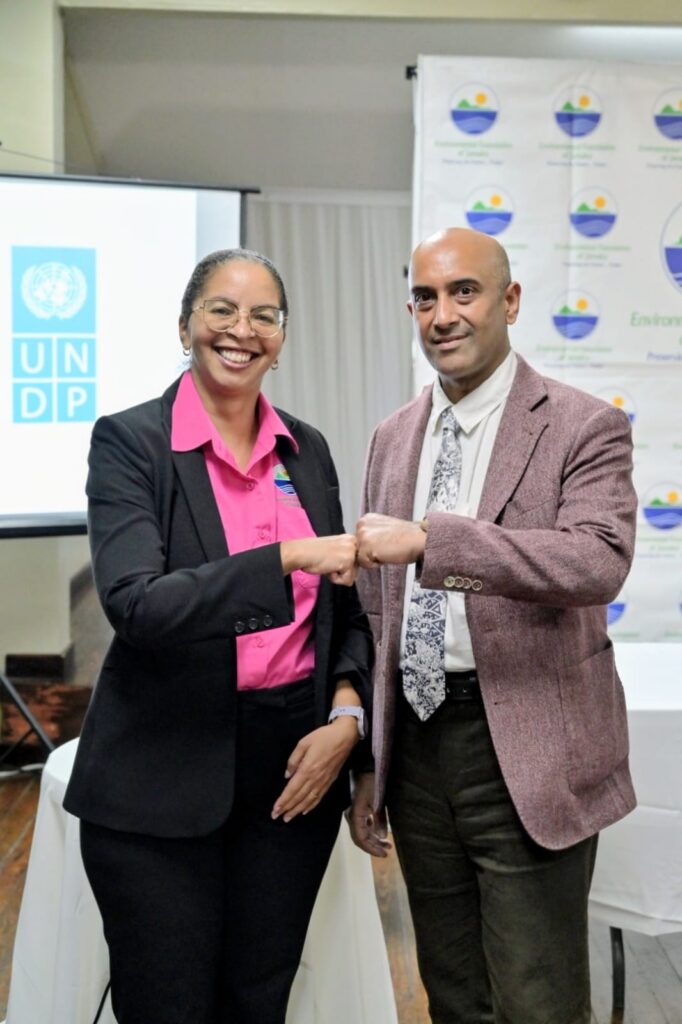
UNDP’s partnership with the EFJ – Jamaica’s premier environmental funding platform for civil society organizations – became official with the signing of a memorandum of understanding (MOU) by UNDP resident representative Dr Kishan Khoday and EFJ chief executive Nicole Adamson at the EFJ’s annual general meeting at the Liguanea Club.
The MOU, established during the critical recovery and reconstruction period in the aftermath of Hurricane Melissa, spans five years and seeks to enhance support for civil society organisations (CSOs) on the road to Vision 2030 targets. The UNDP/EFJ cooperation seeks to scale up financing opportunities for CSOs across Jamaica in areas of ecosystem restoration, climate resilience, environmental governance, nature-based livelihoods and inclusive community development. The new partners committed to advancing their shared goals through joint resource mobilisation and programme development, research and knowledge sharing, and stakeholder dialogues. Importantly, the MOU emphasizes the environment/social development nexus, including issues related to children and youth.
UNDP representative Khoday said the MOU represents another important step in building resilient communities fortified to withstand an escalating climate crisis. He said this required innovative partnerships with domestic funding platforms like EFJ and its strong network of civil society actors to scale up local impact for communities and the environment. He noted that CSOs play a pivotal role in advancing Jamaica’s national climate change and biodiversity policies, including the Vision 2030 green goals. “This new partnership builds on UNDP’s longstanding role over the past 30 years supporting CSO partnerships for local action through the UNDP-implemented GEF Small Grants Programme and other flagship initiatives and aligns with UNDP’s vision to support innovative sustainable finance solutions in furtherance of Vision 2030,” Dr Khoday stated.
EFJ chief executive Nicole Adamson said: “This memorandum of understanding marks an important step forward for the EFJ as we deepen our collaboration with the UNDP. By combining our strengths, we are better positioned to scale impact—supporting climate resilience, sustainable livelihoods, and community development across Jamaica. This partnership reflects our shared commitment to advancing our climate commitments and delivering meaningful, lasting change for the people and environment of Jamaica.”
The EFJ has managed funding for environmental sustainability and child development projects in Jamaica since 1993, with project management and oversight responsibility for a wide range of local initiatives across the island. Its governance structure was later strengthened through the integration of operations with the Jamaica Protected Areas Trust Limited/Forest Conservation Fund, forming an NGO-driven public-private partnership.
Today, EFJ is a member-based organisation with 19 members, including three permanent board members—the governments of Jamaica, United States, and the Nature Conservancy—within an 11-member Board structure.
In recent years, EFJ has expanded its role beyond strictly grant-making to include direct project implementation, including the Global Affairs Canada-funded Jamaica Urban Solutions for the Environment programme.





Comments