US orders St Lucia to stop sending students to Cuba
Toriann Ellis / Our Today
author
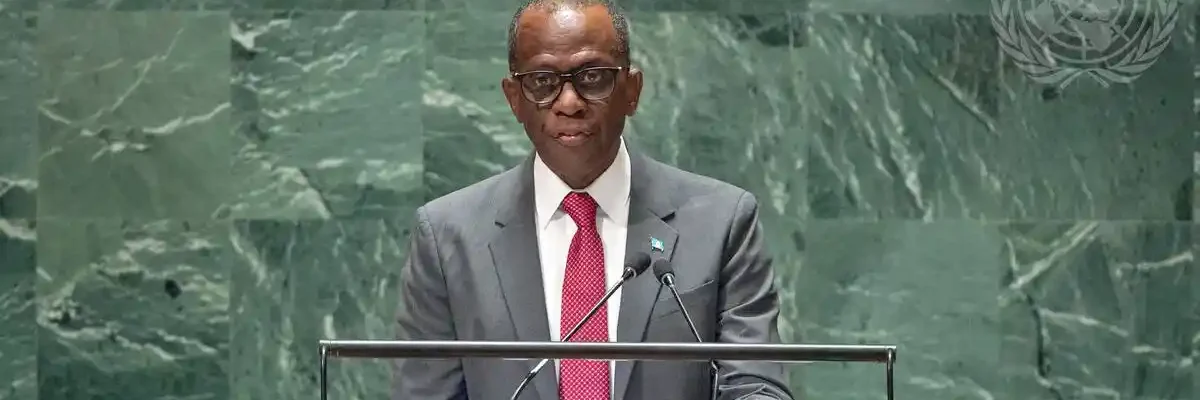
Prime Minister Philip Pierre of St Lucia this week reported on the latest attack from the US, as the island nation has received direct orders to ban local students from studying medicine and other subjects in Cuba, leaving him with a massive political dilemma on his hands.
So far, only St Lucia has publicly admitted to receiving such an edict. Pierre says the Cuba ban will pose enormous problems for his island nation and its health sector in the coming months.
“Many of our doctors got trained in Cuba, and now the great US has said we cannot do that any longer, so that is a major problem I have to face. Some of my colleagues (prime ministers) have already taken a position on this and banned them. So, the American government has said that we cannot even train them in Cuba, so I have a major issue on my hands,” he told the conference.
Regional leaders are set to meet in St Kitts from February 24 in what is shaping up to be one of their most consequential conferences in recent years, as governments complain about a steady and protracted increase in superpower pressure from the US to comply with a string of demands from the Trump administration.
The regional three-day summit will be chaired by St Kitts and Nevis Prime Minister Terrance Drew, himself a Cuban-trained medical doctor and a staunch supporter of professionals working in the region and of students studying in Cuba. He says no one is exploiting the Cubans.
“Since 2003, St Kitts and Nevis has welcomed Cuban professionals who have come, not as outsiders, but as family, helping us to build a stronger, healthier, and more resilient nation. Our Cuban health care professionals have saved lives. Our Cuban-trained professionals have become pillars of society, let there be no doubt. Let me be unequivocal. The federation values its relations with both Cuba and the US. We are a friend to all and an enemy of none. Any accusations of labour practices in our federation are inconsistent with our laws and values,” the Prime Minister said in a recent address to the nation.
“I, like so many of my fellow citizens, had the privilege of receiving a first-class education in Cuba. Cuba has been an indispensable partner of the Caribbean,” he said, defending the programme.
His reference to labour practices has much to do with the current payment system for the Cubans in some jurisdictions, as the monthly take-home pay for some professionals is usually less than 20 per cent of the sum negotiated with the Cuban government.
Secretary of State Marco Rubio, Trump’s frontman on this issue, calls the practice of the Cuban government taking away the majority of their salaries a form of slavery and human trafficking.
So far, several countries, including The Bahamas, Guyana, and Antigua, have scrambled to comply, in part, to allow the medical brigades to continue their lifesaving work and to avoid sanctions such as visa revocations.
Most of the bloc’s 15 members have retained the services of the Cubans. Several governments had made it clear to Secretary Rubio on a visit to the region last year that some health sectors would collapse without the Cubans.

Comments