
Where’s the equality? Scotiabank Women Initiative highlights gender pay gap in Jamaica

ABIGAIL BARRETT / Our Today

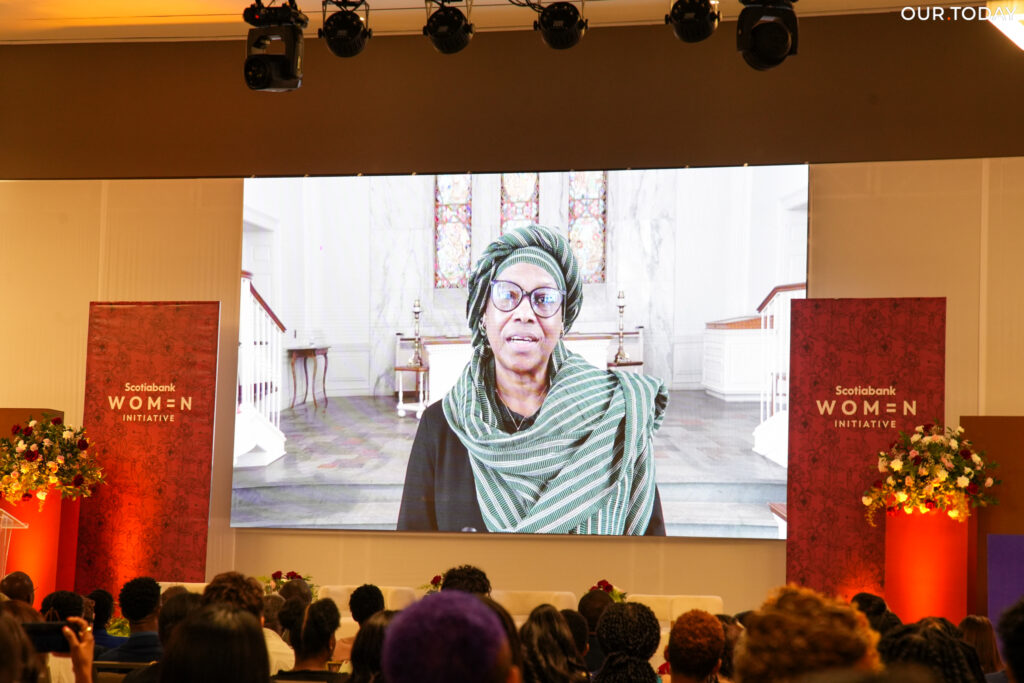
Pay disparities remain a sore contention point for female professionals, as the Scotiabank Women Initiative (SWI) celebrated its third anniversary with a public forum at the AC Hotel Kingston on Tuesday (February 4).
A prominent point of discussion was the gender pay gap in Jamaica, which featured prominently in the event’s deliberations.
Bringing together some of Jamaica’s most influential female leaders to examine the progress, challenges, and future of women in the country.
The event, themed ‘The State of the Jamaican Woman’, explored key issues surrounding women’s economic and holistic welfare of the fairer gender. It was a night of sheer empowerment, while simultaneously celebrating the role of initiatives like SWI in fostering gender equality.
SWI programme lead Nadine Heywood, who is also vice president of credit solutions at Scotiabank, highlighted the initiative’s impact and achievements to date, which include capitalising and equipping women with the tools to grow their businesses, Scotiabank has helped many female entrepreneurs scale their ventures, create jobs, and contribute meaningfully to Jamaica’s economy.

Tuesday’s forum featured an impressive lineup of speakers, including Audrey Tugwell Henry, president and CEO of Scotia Group Jamaica; Patricia Francis, chair of the Trade Facilitation Task Force; Rev. Dr Marjorie Lewis, chaplain at Acadia University; and Claire Bernard, deputy director general of the Planning Institute of Jamaica. Also present were Dr Jacqueline Bisasor-McKenzie, chief medical officer at the Ministry of Health and Wellness; Javilla Hoo, president of the Jamaica Psychological Association; and Leesha Delatie-Budaire, deputy director general at the Statistical Institute of Jamaica.
In her remarks, Delatie-Budaire data on the state of Jamaican women in the job market.

Jamaican women are having fewer children due to factors such as fertility issues, increased labour force participation, and a shortage of suitable male partners at their education level. These trends have contributed to a declining population replacement rate, which has been steadily falling since 1973.
Despite this, women in Jamaica surpass men in tertiary education, with 21.9 per cent attaining higher education compared to 10.9 per cent of men.
Additionally, regardless of their educational fitness, fewer women are employed than men. The data shows that women fall at 61.9 per cent of employment, while men boast a 74.5 employment rate. Women also experience a higher rate of unemployment at 4.5 per cent, while men are 2.6 per cent.
She noted that child responsibilities, and the disproportionate burden of “unpaid care work” play a major role in women’s lower employment rate.

“As women we carry a tremendous mental load, juggling our careers while managing our families…bosses by day…but we still have to tend to all our other responsibilities,” she said. “There are also several other factors that negatively affect our participation in the labour market,”
She explained there is a sex disparity in the employment-to-population ratio, most notably with older women.
“What we are seeing is that for women over 55, the employment to population ratio was 42.9 per cent for females, compared to 66.6 per cent for males.”
She noted that there was a gender employment disparity in households where there was a child less than six years old. For these women, they were unemployed at 58.9 per cent, compared to men at 75.3 per cent.
She noted that although the statistics show that women are disadvantaged in Jamaican society, there are many reasons to celebrate women, “We are the backbone of our families and our communities, we are entrepreneurs, innovators, caregivers and leaders in our own right… we are the ones that keep Jamaica going.”

Claire Bernard, deputy director general of the Planning Institute of Jamaica, echoed similar concerns about gender disparities in the workforce.
“Men earn 54 per cent more than women in Jamaica,” she said.
“Too many women lack agency, we need to wake up and realize that we can make a difference,” she added. “We have to leverage our strengths…I want to encourage everybody to embrace an attitude— just imagine what could happen to this entire country if we embrace an attitude where we could see women, genuinely as equals.”

The discussions focused on the progress women have made in business and leadership, as well as the systemic challenges they continue to face. Panellists highlighted barriers such as access to financing, workplace discrimination, and cultural biases that hinder women’s professional growth. The conversation also examined the role of education and mentorship in helping women break through these barriers.

Tugwell Henry noted that she appreciated the statistics, notes and insights given by the panellists, but noted that since its launch in Jamaica in 2022, the SWI has provided over JM$3 billion in financial support to women-led and women-owned businesses across various industries.
“It was supposed to be over three years, but we blew the target after two and half years, so women are performing and are willing to go through the process to access financing to expand their businesses and to enter into new opportunities.”
The initiative has also offered training and advisory services, reaching more than 500 women through workshops aimed at enhancing their business skills.
She also noted that more women are interested in investments. “The statistics show that women don’t do as well as men…overall we are seeing improvement…”
As the evening came to a close, attendees left with renewed motivation to take their businesses to the next level. The forum not only celebrated the achievements of the past three years but also reinforced the importance of continued investment in female entrepreneurship. Scotiabank’s aim to support women remains steadfast, with the initiative set to expand further in the coming years.
More photos from the event:






Comments