
Wray & Nephew, JFF relaunch coaching programme

/ Our Today
administrator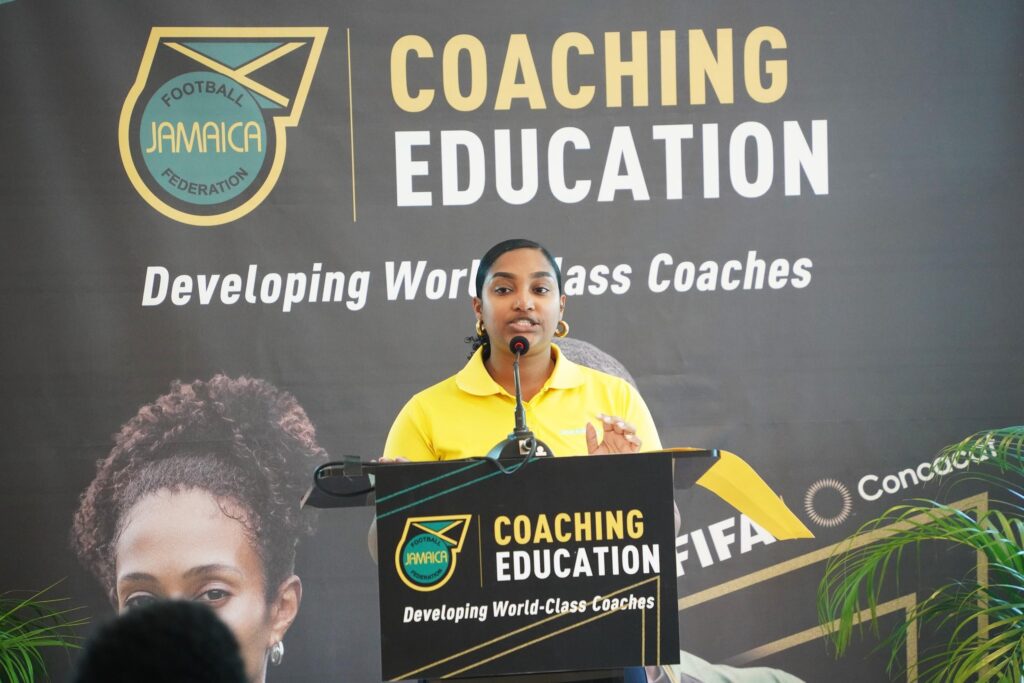
Jamaica’s football received a significant boost with the relaunch of the Jamaica Football Federation’s Coaching Education Programme last Thursday.
The event, which was held at the Jaguar Land Rover Showroom in Kingston, was well attended by the major players in football, including the President of the Jamaica Football Federation (JFF) Michael Ricketts as well as representatives from Concacaf and a number of coaches and coaching educators.
Wray & Nephew White Overproof Rum has been at the heart of holistic football development since leading the charge in title sponsoring the Jamaica Premier League, in addition to KSAFA, and the senior national team programmes. Their brand manager, Kerry-Ann Bryan, hailed the importance of the event even as she highlighted her company’s continued commitment to further coaching development on the island.
“This event serves as a precursor to the Wray & Nephew School of Football’s physical launch, which is a part of our ongoing three-year programme in becoming a worldwide leader in the sport. This is more than a sponsorship—it is a movement to strengthen our communities and celebrate the spirit of Jamaica through the beautiful game.”
Bryan told the audience that 500 coaches will be trained this year alone under the programme.
“At the heart of this programme is the development of our coaches. We are proud to announce that 500 Jamaican coaches will be trained and certified each year, from CONCACAF D to A licenses. This ensures that our football ecosystem is supported by skilled professionals who can nurture talent at every level—from community fields to international stadiums,” she said.
Additionally, Wray & Nephew plans to invest an undisclosed amount of sums on developing infrastructure to enhance the coaching programme, and other football spaces.
“Infrastructure is another key pillar of our programme. Renovations are planned for the Captain Horace Burrell Centre of Excellence for the School and select community infrastructure spaces. These upgrades will provide spaces for training and competition, especially in communities where football can be a powerful force for positive change,” Bryan revealed.
Rudolf Speid, Technical and Development Committee Chairman at the JFF also emphasised the importance of coaching development.
“As Chairman of the JFF’s Technical and Development Committee, I can say without hesitation that this is one of the most important initiatives in our journey to professionalise and elevate Jamaican football. Because at the heart of player development, at every level, is the coach. This programme relaunch isn’t just about offering more courses or issuing more certificates. It represents a complete restructuring of the coaching pathway, which includes how we train, monitor, and support coaches in Jamaica, from the grassroots to professional one,” Speid noted.

Jamaica’s coaching programme has received approval by Concacaf, a significant step in the further development, according to Speid.
“Following our official approval as a C-Level Member of the Concacaf Coaching Convention, Jamaica now operates under a unified, internationally recognised coaching education framework. This means that all licensed coaches will now fall under a structured pathway with mandatory renewals every three years, quality assurance mechanisms, and increased opportunities for progression.”
Andre Waugh, who spoke on behalf of Concacaf, said that Jamaica is making great strides in the region which will lead to the enhancement of the sport.
“In achieving this recognition, the JFF has joined an elite and growing group of forward-thinking member associations across our region that have embraced the belief that better coaches mean better players, stronger clubs and nation teams, and more vibrant football communities.”
“At Concacaf, we are proud to stand beside you on this journey. The Coaching Convention exists to ensure that coaching across our 41 member associations is not only consistent but of the highest possible quality. Through it, we promote mutual recognition of qualifications, enhanced learning environments, and a culture where lifelong learning is the norm, not the exception,” Waugh added.
As more coaches receive local training and development, the aim is for them to expand their horizons globally, seeking opportunities in the United States, Europe, and Asia.






Comments