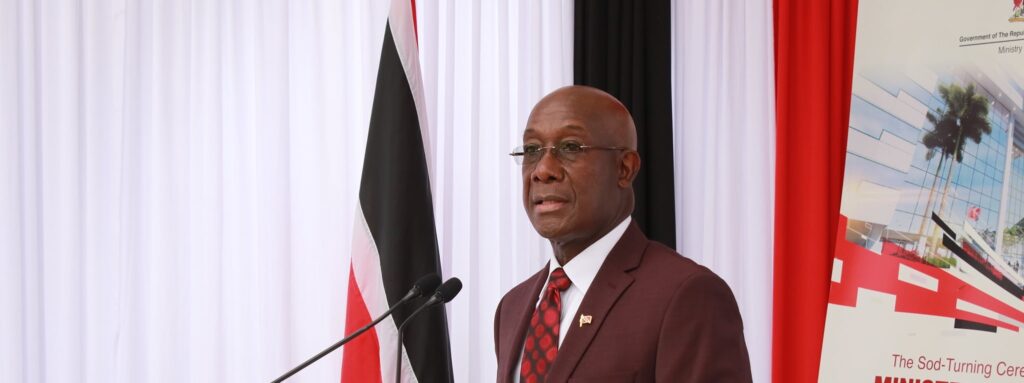
Rowley: T&T Opposition’s Bustamante-like xenophobia is sickening

/ Our Today
administrator
Trinidad and Tobago Prime Minister Keith Rowley has accused a member of the Opposition United National Congress (UNC) of taking a xenophobic stance against the movement of skilled workers that reminded him of statements from late Jamaican Prime Minister Sir Alexander Bustamante that he said led to the collapse of the West Indies Federation 60 years ago.
Rowley’s comments came as the Caribbean Community (CARICOM) Skilled Nationals (Amendment) Bill, 2022 was passed late Friday (June 3) without amendments, with 19 votes for and 11 against.
The bill has been opposed by the UNC, but Foreign and CARICOM Affairs Minister Dr Amery Browne said he found no merit in their arguments to stop the bill.
“We are CARICOM,” he said, adding that the country benefited when its Caribbean brothers donated vaccines for COVID-19.
In his comments, Browne also questioned why the UNC would want to prevent the skilled workers among its own constituents from benefiting from working in the region.
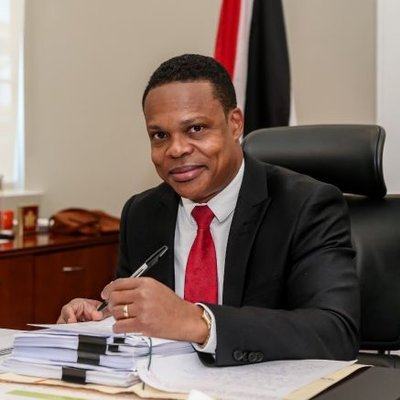
He said the bill would allow for regional food security, which was something for which all parliamentarians across the region should be grateful.
He claimed the Opposition was “opposing for opposing sake” as they criticised the economy but complained that there would be a tsunami of workers flooding the country if the law was passed.
“What I was hearing today is alien to our region. What the bill does will facilitate the orderly, lawful, controlled movement of skilled workers,” he said.
Rowley, in his comments, said the UNC was “consistently taking actions to undermine Trinidad and Tobago and CARICOM, in and out of government”.
STATEMENTS MIRROR SIR ALEXANDER BUSTAMANTE IN 1961
The prime minister, in pointing to an earlier contribution by Rodney Charles, member of parliament from Naparima, said it was “xenophobic” and sickened him.
Rowley said Charles’ statements mirrored those made in 1961 by Bustamante.
At the time, many Jamaicans believed that the Federation would hamper their country’s development and movement towards independence. As a result, the Bustamante-led Jamaica Labour Party successfully forced Jamaica’s Chief Minister Norman Manley to hold a referendum in September 1961 on political secession from the Federation. It passed, with 54 per cent of the vote (251,776 votes to secede versus 216,371 to remain).
“It went into all the things that would happen to Jamaica, when all these (Caribbean) islanders descended upon Jamaica and Jamaica would have to find place and space for them. History has a way of repeating itself.”
Keith Rowley, prime minister of Trinidad and Tobago
Manley’s People’s National Party would go on to lose the subsequent elections of April 1962, and Bustamante became the first prime minister of an independent Jamaica on August 6, 1962.
In commenting on Bustamante’s stance against the Federation, Rowley said: “It went into all the things that would happen to Jamaica, when all these (Caribbean) islanders descended upon Jamaica and Jamaica would have to find place and space for them. History has a way of repeating itself.”
Returning to the T&T opposition, he said: ““The UNC has been consistent in letting down the people of TT on matters of great importance.”
He added that, if Charles’ claims reflected the UNC’s position: “We may as well count CARICOM goodbye.”




Comments