
Jamaica’s clergy leaders raise grave concerns about attempts to block SMA anti-corruption probe

/ Our Today
administrator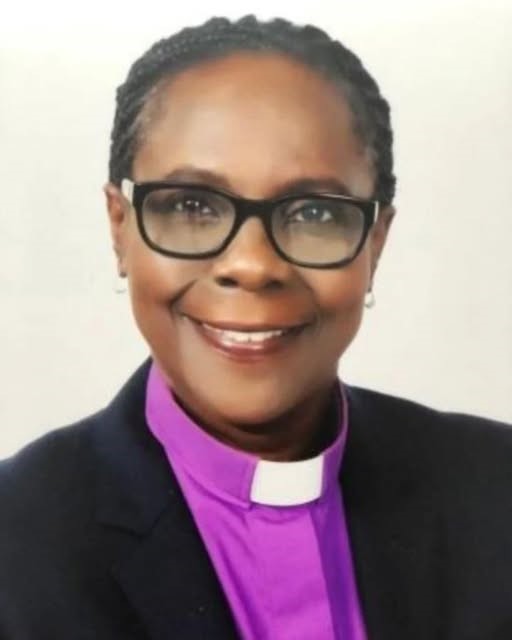
Durrant Pate/ Contributor
Jamaica’s religious community is raising grave concerns about obstacles facing the island’s premier anti-corruption agency, the Integrity Commission (IC), in its investigation into the Spectrum Management Authority (SMA), the national regulator for radio frequency spectrum.
Local church organisations are expressing public concern that attempts to block the work of a national watchdog agency are seen as undermining integrity and transparency in the public sphere. At the heart of the issue is the use of public money in procurement and contract management by the SMA, which ensures interference-free operating frequencies, granting licenses to new radio stations and mobile providers, collecting regulatory fees from telecommunications companies and enforcement duties against illegal activities.
The IC is investigating the SMA with regard to its handing in procurement and contract management issues, but the spectrum regulatory has tried to stop the investigation through a court process, alleging that the anti-corruption agency is acting beyond its legal remit. The SMA went to the Supreme Court of Jamaica, which has given leave for the entity to pursue a judicial review while also issuing injunctions that temporarily restrain aspects of the commission’s investigation.
The investigation is concerned about whether any SMA officials had personal business interests with companies receiving contracts.
First hearing date set
The SMA is arguing that the IC is acting beyond its legal powers and in violation of the SMA’s constitutional rights. A first hearing is due on February 19, 2026. Bishop and President of the Jamaica Council of Churches (JCC), Christine Gooden-Benguche, issued a media release alongside Bishop Roy Notice, coordinating chairman, with Rev Michael McAnuff-Jones, the co-chairman of the Watchman Church Leaders Alliance (WCLA), making the church’s objections known on the SMA’s action.
Meanwhile, Jamaica’s church community sees the SMA’s lawsuit as an attempt to block the IC from holding the SMA accountable in the public interest. “Any efforts that have the effect of obstructing or delaying legitimate anti-corruption oversight raises serious moral and national concerns,” the JCC and WCLA are contending.
According to the news release, “at a moment when public trust in institutions is being tested, the JCC and the WCLA issue a united call for moral courage, transparency, and respect for the lawful work of the IC. We are deeply concerned by recent legal actions seeking to halt an ongoing IC investigation involving the SMA. The right to legal recourse must be respected, and this is part of our orderly arrangement as Jamaican society.”
Other government functionaries challenging IC’s authority
The release from the JCC and WCLA notes that the issue is arguably not isolated, with other public officials challenging the IC’s authority, such as Prime Minister Andrew Holness, who is now engaged in an intense Supreme Court battle about his financial declarations. State Minister Zavia Mayne is also challenging the IC’s interpretation of the law about his financial declarations.
Precise details of the ongoing probe into the SMA are partially protected by Section 53 of the Integrity Commission Act, restricting the IC from publishing investigation details until a report is tabled in parliament. However, the probe concerns allegations that the SMA bypassed competitive bidding processes and favored specific vendors for technical equipment and consultancy services, say reports.
The clergy leaders professed that scripture teaches that authority is a sacred trust, given for the common good and exercised under God’s demand for justice and accountability (Romans 13: 1-7, Proverbs 29: 4) lamenting, “a society’s moral strength is revealed not in how power is protected but in how truth is pursued”. They drew attention to the fact that the IC has publicly stated its concern that evidence may be at risk if its investigation is impeded.
Public call
“This matter, therefore, extends beyond procedural disagreement. It touches the integrity of our governance systems and the confidence of citizens who expect public bodies to be subject to lawful scrutiny,” the church leader emphasised. Furthermore, the JCC and WCLA warned that when institutions resisted such public oversight, the “fabric of the nation is strained” whilst making a public call for redress actions.
- Firstly, for the IC to continue its work with “courage, fairness and fidelity to its legal mandate, in the service of truth and the public interest.”
- Secondly, for the SMA and all public bodies to “cooperate fully with lawful investigations, recognising that transparency strengthens—not diminishes—public confidence.”
- Thirdly, for the Judiciary to “weigh carefully the overriding national interest in preserving robust and effective anti-corruption mechanisms”.
At the same time, the church organizations called for the island’s Christian community and all people of goodwill to pray for wisdom, integrity and righteousness for those in authority contending, “the church stands as a watchman in the nation (Ezekiel 33: 1-9). They went further saying, “the church is compelled by faith to speak when justice is at risk. We reaffirm our commitment to advocate for governance that reflects God’s standards, so that Jamaica may be a nation where justice flows freely and truth is honoured (Amos 5:24).”

Comments