
Ambraee Houslin | Jamaica First, Not Blind Integration: The Case for Strategic Regional Growth

/ Our Today
administratorWhy Jamaican Businesses Must Think Regionally — and Why Jamaica Must Put Its Own Competitiveness First

If Jamaica were a company, analysts would say it has outgrown its home market.
The fundamentals are strong, the talent is proven, but the addressable market is simply too small to sustain long-term growth. Yet instead of treating the Caribbean as a deliberate expansion strategy, Jamaica has often engaged the region as an obligation through treaties, summits, and rhetoric rather than as a disciplined business opportunity. The result is a lingering question that refuses to go away: has Jamaica truly benefited from CARICOM, or has integration outpaced our readiness to compete?
The Data Reality: An Uneven Regional Outcome

Measured purely by trade, Jamaica’s experience within CARICOM has been consistently unbalanced.
The country has run a persistent merchandise trade deficit with the bloc, importing significantly more than it exports.
CARICOM represents a relatively small share of Jamaica’s total exports while accounting for a far larger portion of imports, particularly in energy, food, and manufactured goods. Jamaica’s share of total intra-CARICOM exports remains modest when compared to countries such as Trinidad and Tobago, which benefit from scale and energy-driven production advantages. These outcomes have understandably led many to question whether regional integration has meaningfully strengthened Jamaica’s economic position.
CARICOM Was Never Meant to Replace Competitiveness
Trade imbalances alone do not invalidate the concept of regional cooperation. CARICOM was never designed to be a growth engine in and of itself. It is a framework that reduces friction, not a substitute for competitiveness, scale, or strategy. Businesses that struggle with productivity, logistics, financing, or cost structures at home are unlikely to succeed regionally simply because tariffs are reduced. In practice, many Jamaican firms have approached CARICOM passively, while more assertive regional players have treated it as a platform to execute deliberate expansion strategies.
Regional Thinking Is Necessary — But It Must Be Strategic
Jamaica’s domestic market places natural limits on business growth. Population size, purchasing power, and market saturation inevitably constrain even the strongest local enterprises. Regional expansion is therefore not an act of ambition but of necessity. Companies that fail to think beyond Jamaica face stagnation, concentration risk, and vulnerability to shocks. At the same time, regional thinking does not mean indiscriminate expansion. It requires selectivity, sequencing, and a clear understanding of where Jamaican firms can compete profitably.
How Jamaican Companies Can Build Regionally Without Overreaching

Effective regional expansion begins with disciplined market selection. Caribbean markets differ widely in income levels, regulatory environments, logistics costs, and consumer behaviour.
Trinidad and Tobago offers industrial and energy-linked demand, Barbados presents opportunities in financial and professional services, Guyana is experiencing rapid growth driven by infrastructure and housing needs, while the OECS states provide tourism-linked demand and niche import opportunities. Jamaican firms that expand in phases, rather than attempting a simultaneous regional presence, are more likely to succeed.
Business model choice is equally important.
Services scale far more efficiently across borders than physical goods, which face shipping costs, customs delays, and inventory risks. Jamaican firms are particularly well positioned to export services such as business process outsourcing, professional and advisory services, creative industries, construction management, healthcare administration, and technology-enabled solutions.
These sectors allow firms to establish regional footprints with lower capital intensity and faster returns.
Partnerships further reduce execution risk. Rather than replicating domestic operations wholesale, successful firms leverage joint ventures, distribution partnerships, and minority equity positions that preserve strategic control while benefiting from local expertise. In the Caribbean, collaboration often outperforms ownership.
The Caribbean’s Untapped Markets Still Present Real Opportunity

Despite decades of integration, much of the Caribbean economy remains underdeveloped and underserved.
Guyana represents one of the most significant growth opportunities in the region, with oil revenues driving demand for housing, healthcare, logistics, financial services, and consumer goods. Jamaican firms are well-positioned to participate but have yet to engage at scale.
Similarly, the OECS countries, though individually small, collectively represent a meaningful market that remains highly import-dependent. Opportunities exist in food processing, hospitality services, renewable energy, and digital platforms. In these markets, scale is achieved through aggregation rather than size.
Regional supply chains also remain fragmented. The Caribbean imports billions annually in food, construction materials, and manufactured goods, yet regional production and logistics networks remain weak. This presents opportunities for Jamaican firms to develop agro-processing hubs, cold-chain logistics, and regional warehousing platforms, leveraging Jamaica’s ports and geographic position.
Positive Steps Taken by the Current Government

Importantly, Jamaica is not starting from a position of policy inertia. The current administration has taken several meaningful steps that align with a sovereignty-first but regionally engaged growth strategy.
Macroeconomic stability has been restored and maintained, significantly lowering country risk and borrowing costs. This has improved access to capital for Jamaican firms and strengthened investor confidence both prerequisites for regional expansion. Fiscal discipline and debt reduction have given the country greater policy flexibility and credibility within the region.
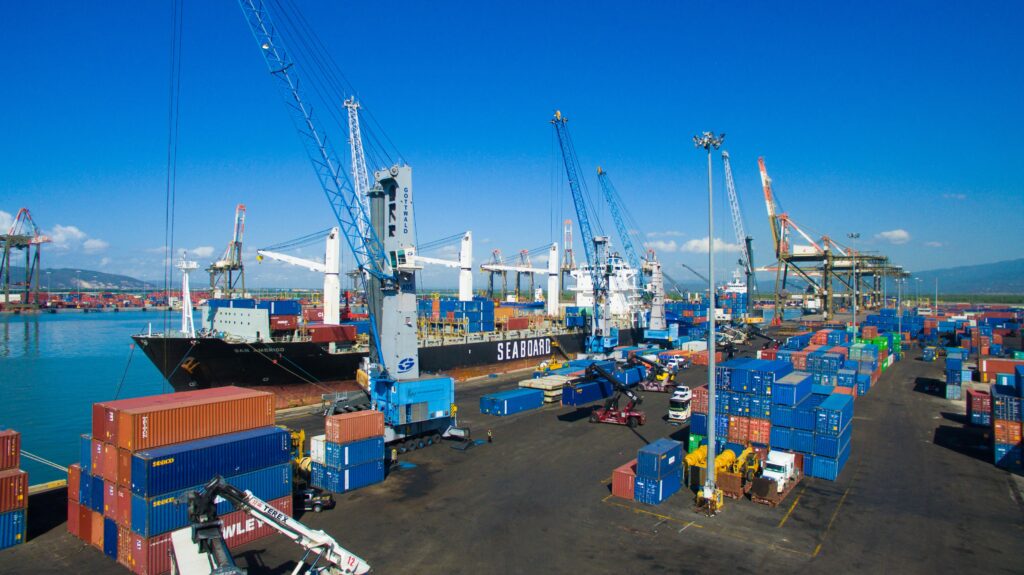
The government has also prioritised logistics, infrastructure, and port development, reinforcing Jamaica’s ambition to function as a regional hub. Investments in ports, roads, and digital infrastructure directly support regional trade, services exports, and supply-chain integration.
Export development and MSME support initiatives have expanded, with agencies such as JAMPRO playing a more active role in market intelligence, export readiness, and regional promotion. Jamaica’s increasingly pragmatic posture within CARICOM focused on enforcement, reciprocity, and protection of sensitive sectors signals a more mature and strategic approach to integration.
Why Jamaica Needs a Sovereignty – First, Pragmatic Policy Framework

For Jamaican businesses to succeed regionally, policy must remain intentional. A sovereignty-first approach does not reject CARICOM, nor does it advocate isolation. It recognises that national competitiveness must precede full integration. Jamaica cannot integrate effectively into a regional market if its domestic firms are structurally disadvantaged.
Policy must therefore continue to focus on lowering energy and logistics costs, expanding access to patient capital, enforcing fair trade rules within CARICOM, and aligning incentives with export performance. Integration should be conditional on economic benefit and reciprocity, not treated as an end in itself.
This is not an argument against CARICOM. It is an argument against unconditional integration that benefits stronger regional players while weakening domestic enterprise.
From Integration as Ideology to Integration as Strategy

The future of Jamaica’s regional engagement should be neither withdrawal nor blind alignment. It should be strategic participation. CARICOM should be treated as a tool, not a doctrine. Jamaica should integrate where it strengthens competitiveness, negotiate where asymmetries persist, and protect where domestic capacity is still being built.
Regional cooperation works best when sovereign states engage from positions of strength. Jamaica’s priority must therefore remain the development of strong domestic enterprises capable of competing regionally, rather than assuming integration will create that strength by default.
Conclusion: The Region Is Not the Goal — Scale Is

The Caribbean is not Jamaica’s destination; it is Jamaica’s proving ground. Regional integration should not be measured by how open our borders are, but by how many Jamaican businesses successfully cross them and return stronger. The choice before us is not CARICOM versus sovereignty, or integration versus independence. It is whether Jamaica engages the region from weakness or from confidence.
The future of Jamaican business will belong to those who think regionally, act strategically, and insist that national competitiveness comes first.
That is not anti-CARICOM.
That is economic maturity.
Ambraee Houslin is a Private Equity Strategist with a strong background in economics and statistics. He has extensive experience in investment banking, corporate finance, and investment research across Jamaica and the Caribbean region. His core expertise includes mergers and acquisitions, capital structuring, and executing complex transactions that drive growth and value creation. Ambraee has led and supported deals spanning strategic acquisitions, private credit facilities, and post-transaction integration strategies for high-impact sectors.






Comments