
Holness defends decision to loan JPS US$150 million
Ainsworth Morris / Our Today
author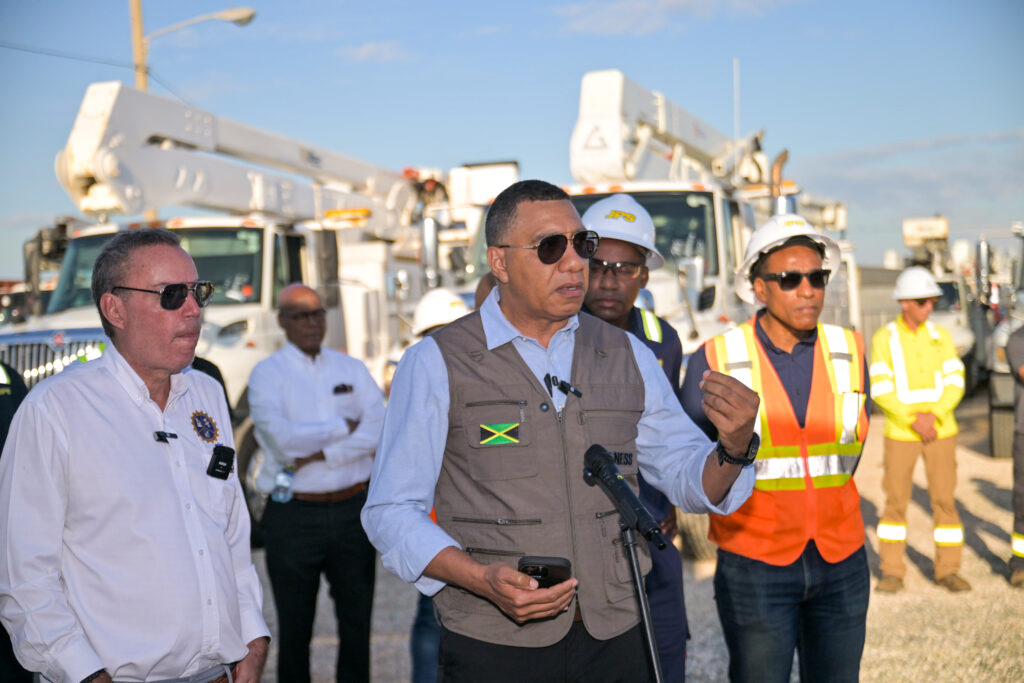
For the very first time since the Government was criticised in November for its decision to loan the Jamaica Public Service Limited (JPS) US$150 million, Prime Minister Dr Andrew Holness on Friday defended the move, saying it will better aid the full restoration of electricity in communities severely affected by Hurricane Melissa.
“It has been criticised in quarters for which the criticism is not unexpected, but it is important to position it against other decisions that we have made, which have turned out to be the correct decisions, and which has facilitated the building of resilience and the fast recovery of the economy,” Dr Holness said during his first official address for 2026 during the tour of imported trucks and equipment for JPS at their Hunt’s Bay Plant located along Marcus Garvey Drive in Kingston on Friday.
“The point is that though the JPS is a private company with public interest, the JPS provides a public service. In effect, the JPS provides a public good, and that public good cannot, in any way, be disrupted. It is the foundation on which we have growth.
“It is the foundation for security, and it is the foundation for your daily convenience, and, therefore, the Government must do everything in its power to ensure that our electricity grid is up and running effectively,” he said.
The event was for the commissioning of another 270 trucks, vehicles and equipment and with approximately 470 line workers from Kingston’s port to the hardest hit parishes, where persons are still living without electricity following the passage of Hurricane Melissa on Tuesday, October 28, 2025.
He said another reason for the loan was that the JPS is a private company in which the Government has a 20 per cent stake.
“We took a decision to support the provision of a public good,” he said.
He explained that the second consideration was that the Government recognised that the regulatory structure under which the JPS operates, it is not one that supports the optimum provision of the service to the public.
“And, therefore, we took another decision, that even as we extend a loan facility to the JPS, which happened to come at a time when the JPS’ licence is being renewed, we would not make the two things work as one, meaning, we would separate the financing issue from the relicensing issue,” Dr Holness explained.
“And, right now, the Government of Jamaica and the JPS continue in negotiation to find the optimum position; the best position for a new licence for their operations and regulations in Jamaica. The public wins in both ways,” he said.
Dr Holness said the trucks and the line workers arrived to hasten the restoration of power, while adding that the Government made the right decision.
“And I want every thinking Jamaican, therefore, to appreciate that those who were critical of the Government’s decision are effectively saying that you should wait for a year to get back your electricity. That’s effectively what that criticism is saying,” he said.


Comments