
MLSS supercharges household damage assessments across hardest-hit parishes

Toriann Ellis / Our Today
author
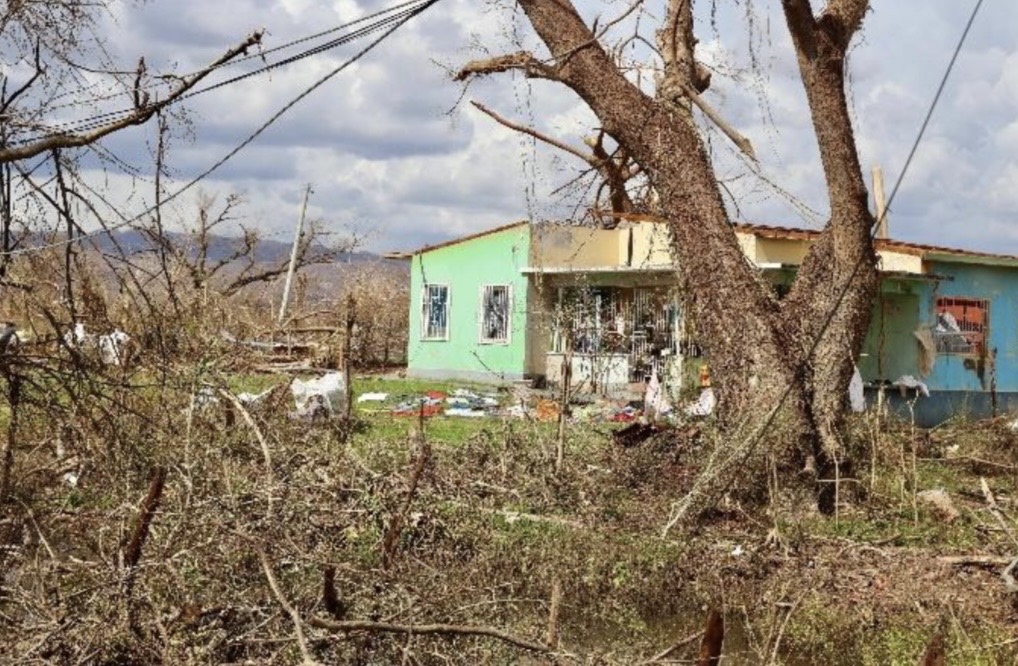
The Ministry of Labour and Social Security (MLSS) has intensified its national household damage assessment operations, accelerating support to families affected by Hurricane Melissa.
The MLSS, as mandated under Jamaica’s disaster management framework, leads the national post-disaster household damage assessment process.
Minister of Labour and Social Security, Pearnel Charles Jr, highlighted that since December 4, 2025, some 540 trained assessors are deployed daily using the Jamaica Household Damage, Impact and Needs Assessment (JHDINA) platform, executed by coordinated multi-agency teams led by MLSS staff.
Some 56,267 assessments have been completed to date, and the pace is being accelerated.
Immediate Expansion of Assessment Teams
The ministry has activated deployment enhancements, including assessors funded by the World Food Programme (WFP), JDF National Service Corps members, MLSS officers repositioned from Kingston and St Andrew to Mandeville, parish officers from St Mary supporting Trelawny, and parish officers from Portland reinforcing St James.
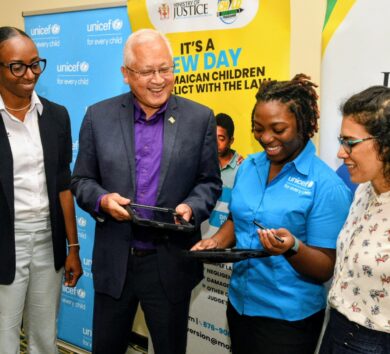
The ministry is widening its network, deploying additional support, including career field officers through the World Food Programme and private sector partners, officers under the Social Inclusion Programme, partnerships with UNDP, World Central Kitchen/Peace Corps, Ministry of Justice, UWI, and HEART/NSTA Trust.
“We are executing a maximum-deployment strategy because the people hardest hit by Hurricane Melissa cannot wait. By supercharging our assessment teams, we are accelerating relief to thousands of Jamaicans, ensuring help reaches them faster, and recovery starts sooner,” said Minister Charles Jr.
Surge Plan: 600 Assessors to complete 117,000 Household Assessments
Despite strong progress, the scale of national impact far exceeds the current field capacity of MLSS, necessitating a structured inter-government approach, excluding MDAs that are already engaged in substantial field operations within their respective mandates, such as the Ministry of Health and Wellness, the Ministry of Industry, Investment and Commerce, the Ministry of Economic Growth and Job Creation, and the Ministry of Agriculture, Fisheries and Mining, to complete the estimated 150,000 household assessments required.
This further acceleration strategy is supported by the relevant MDAs with field capacity to complete the remaining household damage assessments within the accelerated timeline and to finalise the national dataset required for recovery and rehabilitation planning.
The Ministry requires 20 working days for full execution of the four-week surge. It proposes deploying 200 three-member teams (600 assessors) across the six most severely affected parishes to complete the remaining 117,000 household assessments within this 20-day operational window.
“This is a tightly coordinated national operation. We are delivering consistent, real-time field data, driving timely and targeted assistance. This integrated approach will improve each consistency and verification across all parishes. Uploading of remaining paper-based assessments, particularly from western parishes, is ongoing, and will finalise the national dataset, strengthening planning for recovery and rehabilitation,” said Minister Charles Jr.
The ministry affirms that this nationwide operation, driven by expanded personnel, strengthened military collaboration, and unified cross-agency coordination, marks the fastest and most comprehensive assessment effort in Jamaica’s disaster response history.





Comments