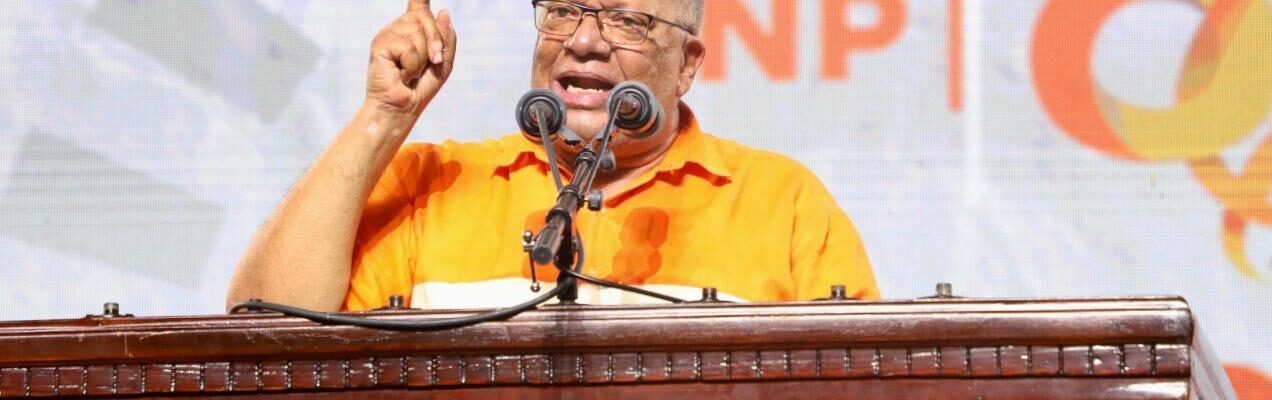
Peter Phillips makes clarion call for political unity

/ Our Today
administrator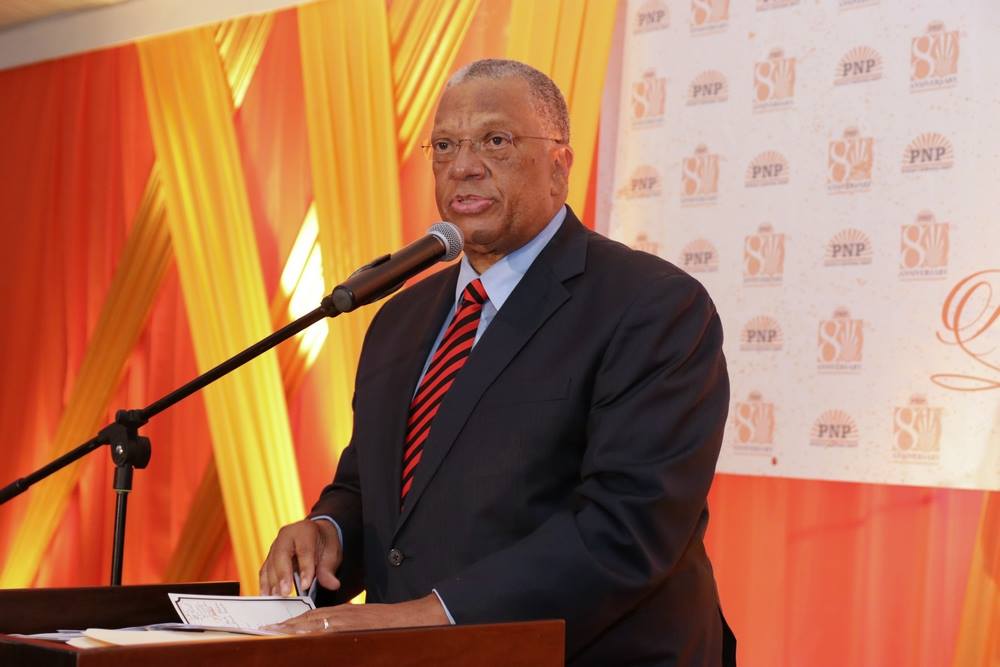
Durrant Pate/Contributor
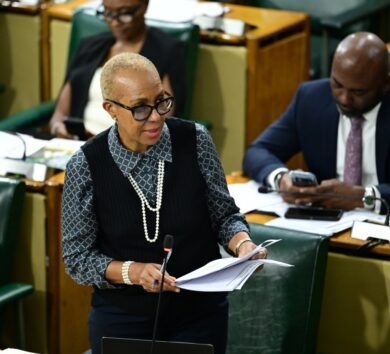
In what is believed to be one of his final speeches in parliament as a legislator, former Opposition and PNP Leader and Cabinet Minister Dr Peter Phillips used his presentation on Tuesday to make a clarion call for political unity.
Drawing on lessons of the past, Dr Phillips, who has been a Member of Parliament for 31 years, having first entered in May 1994 and prior to that was a Senator, challenged the Andrew Holness administration for the ‘one-upmanship’ in which the country is being governed.
Making his contribution to the Sectoral Debate, Dr Phillips went into a history lesson in the legislature, which was a sobering lesson for those in attendance, highlighting the positive attainments in Jamaica through political unity.
The topic of his presentation, “Lessons from Our History” sought to provoke the two major parties into a “sense of collective purpose” citing that as an Independent nation all of Jamaica’s great accomplishments have been the result collective endeavours noting, “nothing highlights this more than our efforts to reduce public debt and achieve sustained economic growth, a task still not achieved.”
Jamaica faced many problems
Acknowledging that for decades since the global economic upheavals stemming from the oil price shocks of 1973, Jamaica has faced a problem of the build-up of an unsustainable public debt, low growth and high-levels of poverty, resulting in the country entering into successive IMF programmes with one going off course in 2011 under the Bruce Golding regime.
“This issue here is not to assign blame but to highlight the factors that led to the success of the IMF Programme. The fact is that while much has been focused on the contribution of Prime Minister Portia Simpson Miller and myself, in my view, we miss the significance of the united national effort that was involved,” Dr. Phillips reminded the parliament.
This includes public sector workers signed up to make the sacrifice, bondholders committed to endure a “haircut” and loss of interest payments in the National Debt Exchange (NDX), with the general population enduring a major tax burden. Those, he said, are the more obvious examples of the unity of effort that was involved.
He cited the Economic Programme Oversight Committee (EPOC) as another example of a collective effort at oversight, thus uniting the private sector, the labour movement, civil society and state authorities, the content of the epochal tax-reform effort, the result of national effort reflecting private sector collaboration through the “Matalon Committee.
The elder statesman admitted that while we have achieved some measure of fiscal discipline and balance, we have not managed to secure the growth in incomes and productivity that we need in order to meet the aspirations of the Jamaican people.
Citing the failure of the Holness administration’s “5 in 4” model and its Economic Growth Council suggested, “Just like how the Matalon-led Committee on Tax Reform helped usher in a period of investment activity and profitability – maybe an analogous National (NOT one-side political) grouping could help provide us with a blue print for growth.”
Retrograde steps taking place
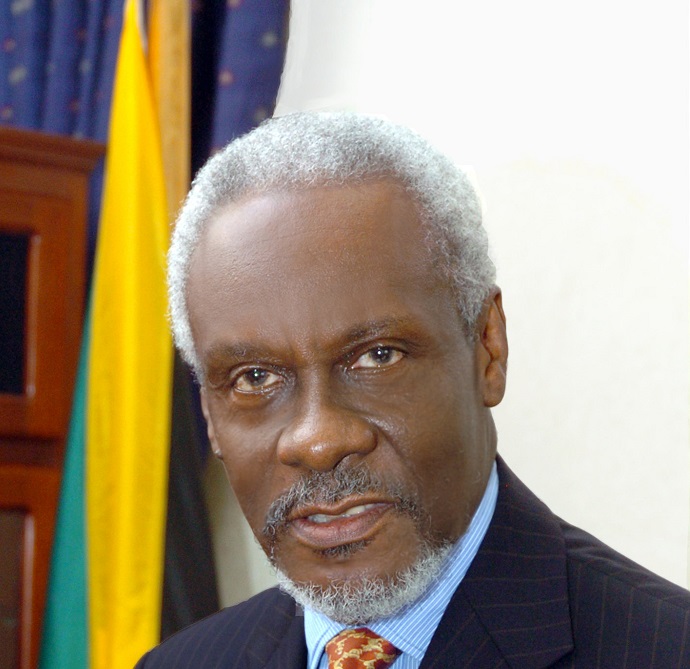
He focused on the electoral reforms, which has taken place through bipartisan dialogue leading to the formation of the Electoral Commission of Jamaica and the Political Ombudsman Act in 2002, where many hours were spent between former Prime Minister and then JLP Leader, Edward Seaga and himself on then Prime Minister, P.J. Patterson’s instructions to find an appropriate office holder.
Conventions were established that required that Parliament cede its authority to the ECJ regarding electoral matters, including the determination of Parliamentary boundaries, resulting in a growing confidence in the electoral system, the virtual elimination of political violence, and an enhanced reputation for Jamaica’s electoral democracy in the international community.
Dr Phillips remarked, “Against this background of history, it must be unwise for one side to unilaterally eliminate the independent office of the Political Ombudsman. Already, we can see evidence of a rise in tensions. Even more, it flies in the face of our traditions of governance for one side to abrogate to itself the authority to create a new parish, with scarcely a consultation with the other side, particularly given the implications for electoral matters and the stability of the nation generally.”
For Dr Phillips, “We need to learn from our history and our contemporary experience. Nationhood is not the result of the ‘sharing of geographic space’. Indeed, history is replete with examples of people sharing the same territory, engaging in mutually destructive conflict with each other:
– In Northern Ireland – the basis was religion
– Palestine – ethnicity and religion
– Yugoslavia (Serbia Bosnia) – ethnicity and religion”
In conclusion, he opined that building the Jamaican Nation requires the application of good-governance, principles of accountability, transparency, integrity, etc., but must also be premised on principles of participation – giving citizens an opportunity to be part of the decision-making process.

Comments