
SIDS need $2 trillion annually to address climate change

/ Our Today
administrator
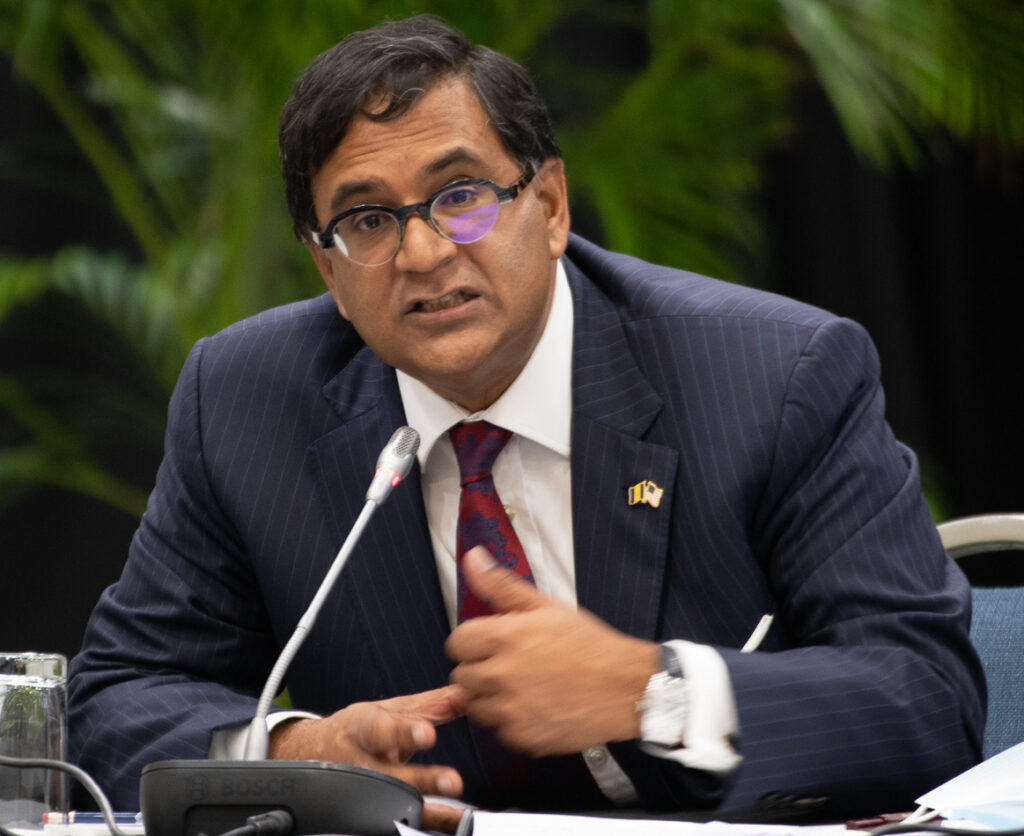
Professor Avinash Persaud says $2 trillion is required per annum for small island developing states (SIDS) to respond to the effects of climate change.
Persaud, a panellist at Thursday’s (March 30) University of the West Indies’ virtual Vice-Chancellor’s Forum on The Bridgetown Initiative, mused that the Caribbean remains challenged with respect to finance mobilisation.
Referencing the 2022 report of an Independent High-Level Expert Group on Climate Finance, co-chaired by Dr Vera Songwe and Professor Lord Nicholas Stern, Persaud said, “That number is bigger than any developing country’s balance sheet. It’s beyond all the philanthropists. It’s a big number. Bridgetown is a system of finance that gets us to $2 trillion a year.”
The panel, convened by forum host, UWI Vice-Chancellor Sir Hilary Beckles, included Ambassador Malgorzata Wasilewska, head of the European Union Delegation to Barbados and CARICOM; Barbadian Minister of Foreign Affairs and Foreign Trade Kerrie Symmonds; and Kevin Bender, director of greening sovereign debt at The Nature Conservancy.
With $2 trillion needed annually by SIDS, the collective call is for a global coalition to fund climate mitigation and adaptation.
Giving a historical context for the conversation, Sir Hilary reflected on the 1944 United Nations Monetary and Financial Conference in Bretton Woods, New Hampshire, which convened to create a global foreign exchange system.
The resulting Bretton Woods Agreement and system birthed the International Monetary Fund (IMF) and the World Bank.
Professor Beckles said, “At that time, as Prime Minister Mottley has argued so eloquently, most of the nations in the world were not at the table. Are the Bretton Woods institutions coming to the rescue of these nations, who through no fault of their own have found themselves at the bottom end of the global recovery process? There is undoubtedly a moral crisis.”
“The university is honoured to stay supportive of the strategy of economic justice for the people of this region and all of those who have suffered the exploitative journey of colonialism. This initiative, this vision, emergent from the economic and political imagination of Prime Minister Mottley is consistent with the finest economic thinking that has emerged out of this region. It is consistent with the vision that has been embedded and enrooted in the economics of The UWI,” Beckles added, promising the support of regional university.

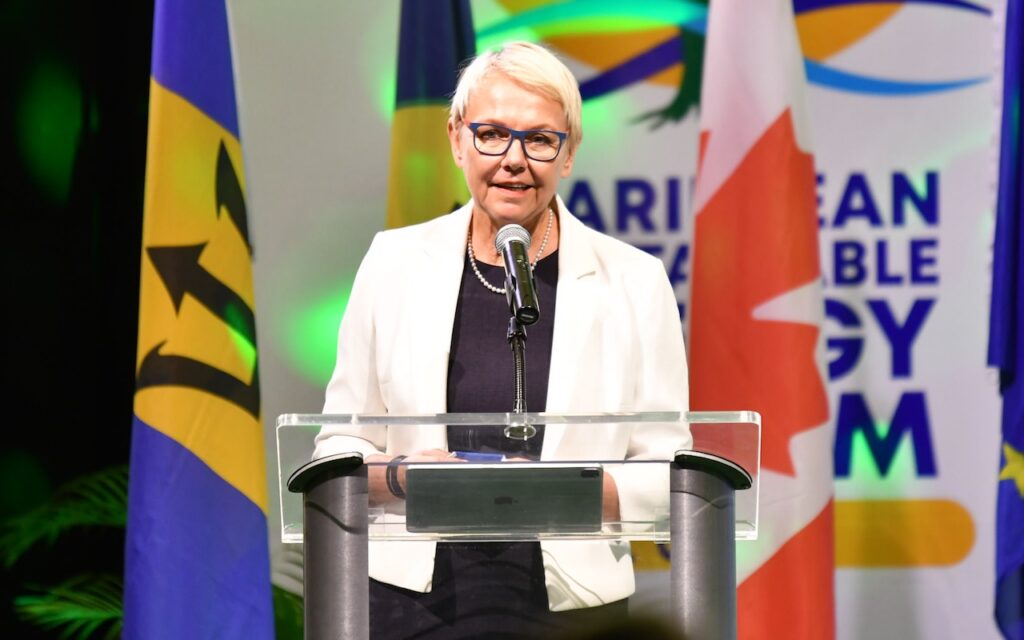
For her part, Ambassador Wasilewska acknowledged the EU’s bridge building role as new funding arrangements were established at COP27 (Convention on Climate Change).
Speaking on multilateral cooperation in financing climate adaptation, she however, also called for funding beyond public purses.
“I have to stress that the EU and its member states are the largest providers of climate finance in the world. We will be no less ambitious as we move towards 2027. However public finance will never be enough to respond to the scale of the climate and environment challenge. All actors will need to be on board and align financial flows with the Paris Agreement goals. This includes the private sector and multilateral development banks” she said.
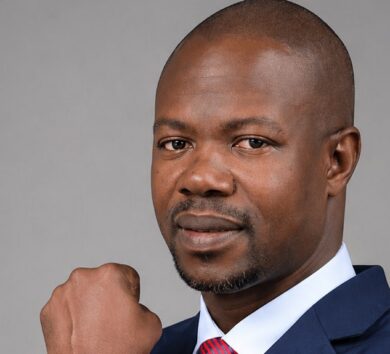
Commenting on behalf of Prime Minister Mia Mottley, Foreign Minister Kerrie Symmonds noted full agreement.
He called to the conversation stakeholders of the private sector where egregious profits are made; “the simple moral message really is that if there is no planet then there can be no profits; so, it is well within the interest of some of these companies to also be involved in the conversation.”
As the world’s largest conservation organisation, serving 70 different countries, Bender confirmed that The Nature Conservancy has worked with SIDS funding conservation, biodiversity and climate projects.
“We have found, similar to the Bridgetown Initiative, that there’s not enough donor money, just like there’s not enough public sector funding to cover all the needs of climate adaptation and climate mitigation – so our group is tasked with finding new solutions for coming up with the cash flow for climate protection. The mitigation world is much more conducive to commercial financing. Getting as much commercial financing into that public sector space as possible; I think that is the real opportunity of the Bridgetown Initiative.”

Professor C. Justin Robinson dubbed The Bridgetown Initiative as the most significant global policy initiative to originate from the Caribbean. The initiative, devised by a group led by Mottley and Persaud, offers real and bold solutions to overcoming some of the key challenges faced by small island developing states (SIDS) in mobilising finance support from rich countries to respond to climate change.
At the forum, Professor Robinson reiterated the urgent need for the success of the Bridgetown Initiative “…it is a critical piece of the pie if we are to attract the significant amount of funding we need for mitigation and adaptation across climate vulnerable nations” he said.
Professor Persaud was positive, commenting on the likelihood of success, as he explained, “We’ve thought very carefully about the design of the Bridgetown Initiative. Other efforts have been unsuccessful because they have relied heavily on one set of countries writing very large cheques for others. The Bridgetown Initiative recognizes that is not going to happen in the short term.”
According to Persaud, Bridgetown calls for $1.7 trillion not to be funded by any government but by the private sector with the multilateral development banks playing a catalytic role.




Comments