
TS Elsa marginally strengthens, could reach hurricane-force winds tonight

Gavin Riley / Our Today
administrator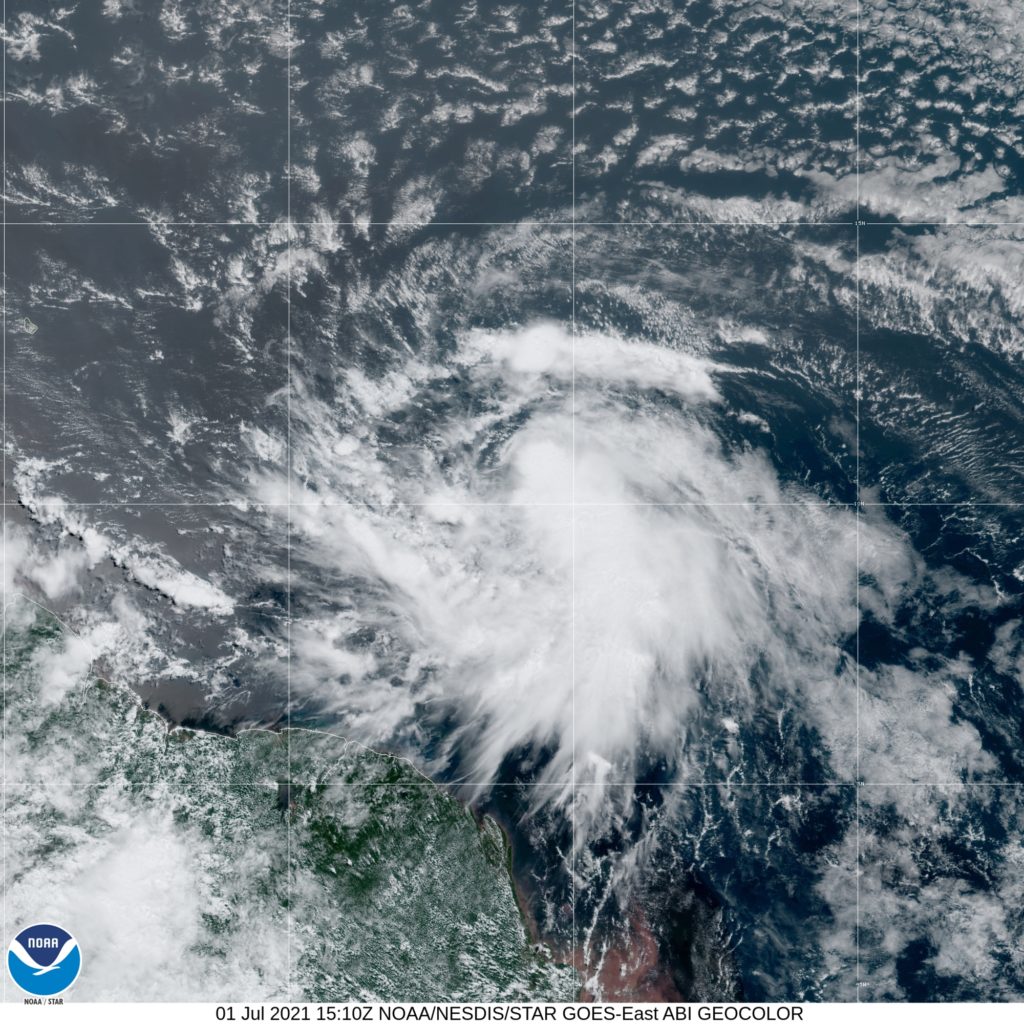
Meteorologists at the US-based National Hurricane Center (NHC) have advised that a roaring Tropical Storm Elsa continues to grow in strength in the open Atlantic on Friday (July 1).
The NHC, in its 11:00 am Atlantic Standard Time (AST) update, said that Elsa was now packing slightly stronger maximum sustained winds of 75 kilometres/hour, with higher gusts.
The hurricane watchdog is forecasting that based on recent satellite wind data, TS Elsa seems very likely to have additional intensification over the next 48 hours.
The storm is currently “racing” west towards the Eastern Caribbean at 44 kilometres/hour—a momentum the NHC expects to change west-northwest and greatly increase in the next day-and-half.
As tropical-storm-force winds extend outward some 150 kilometres, mainly to the north of Elsa’s centre, the warnings and watches activated for sections of the Windward and Leeward islands remain in effect.
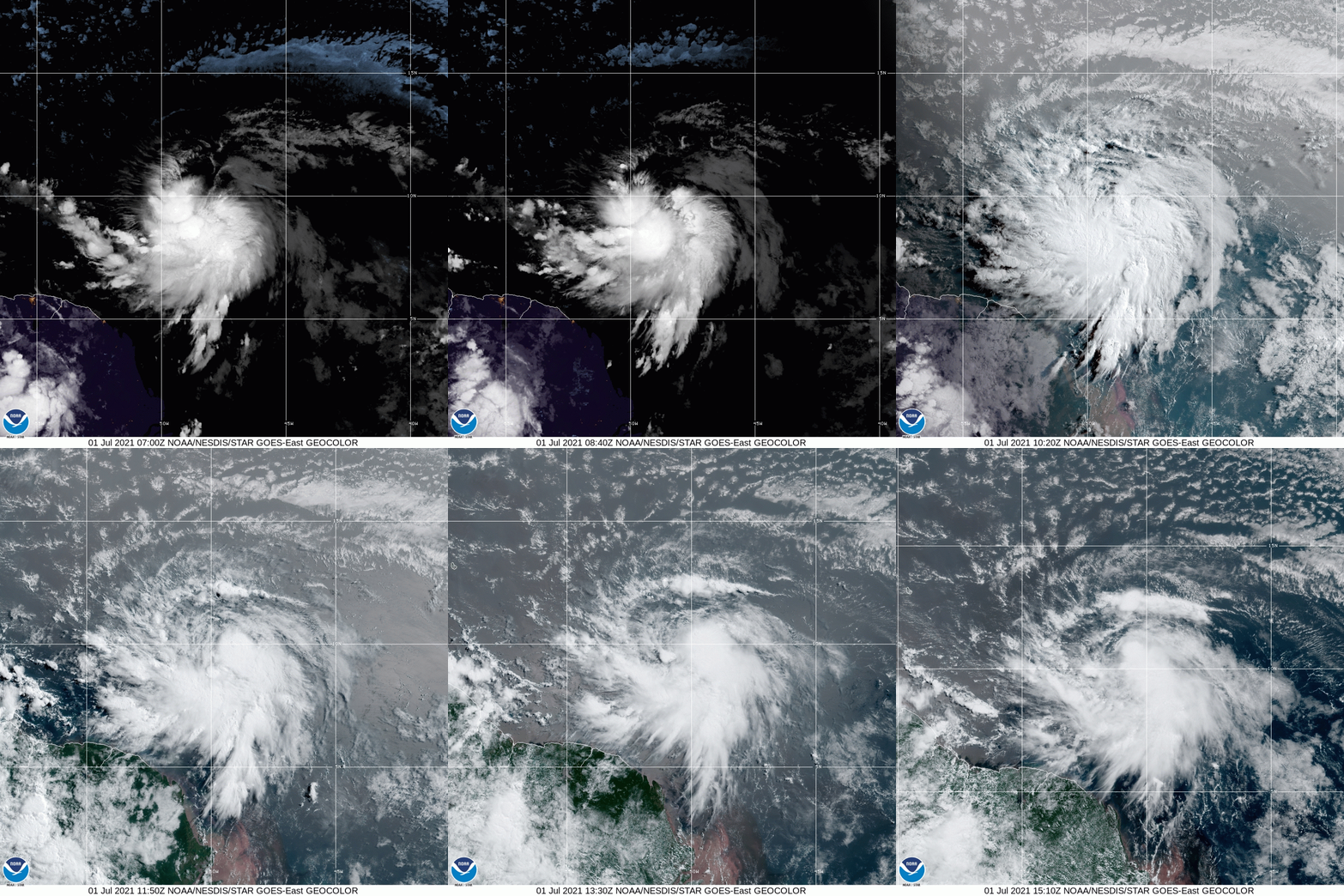
“On the forecast track, Elsa will pass near or over portions of the Windward Islands or the southern Leeward Islands on Friday, move into the eastern Caribbean Sea late Friday and Friday night, and move near the southern coast of Hispaniola on Saturday. By early Sunday, Elsa is forecast to move near portions of eastern Cuba,” the NHC advised.
Elsa is the fifth-named storm of an increasingly active 2021 North Atlantic Hurricane season.
While projections indicate Elsa poses no direct threat to Jamaica just yet, the tropical storm’s impact could be felt as early as late Saturday with night-time showers drenching eastern parishes.

Related coverage:
- Tropical Storm Elsa forms in the mid-Atlantic, warnings issued for parts of Eastern Caribbean
- A bleak, wet weekend for Jamaica






Comments